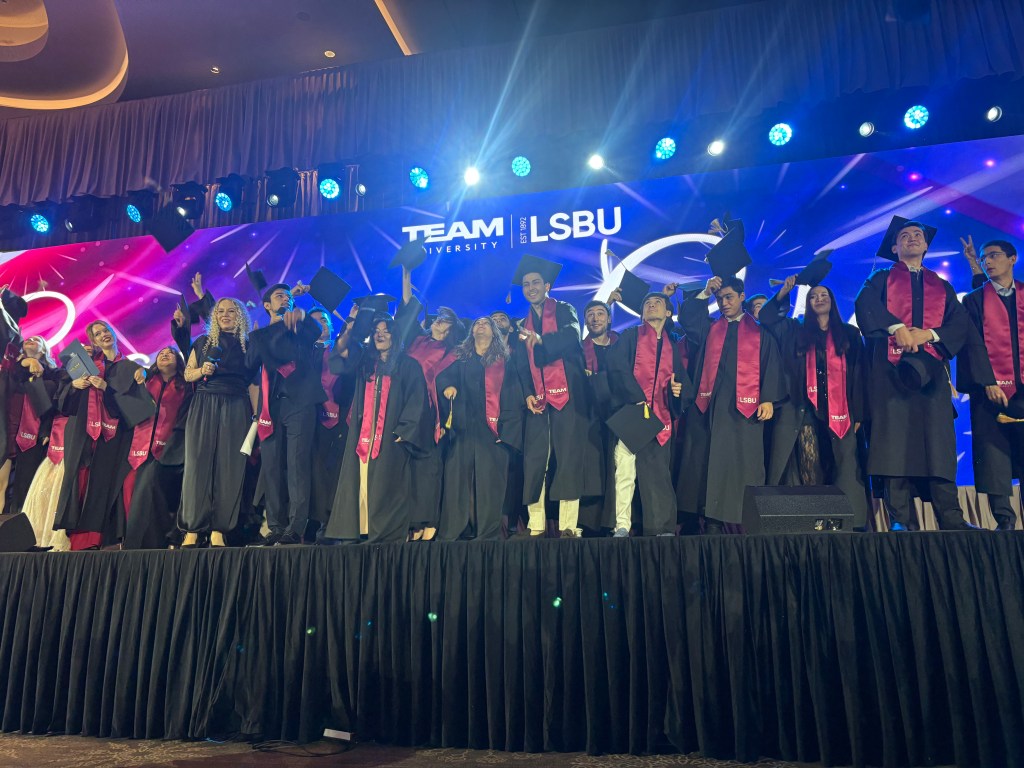
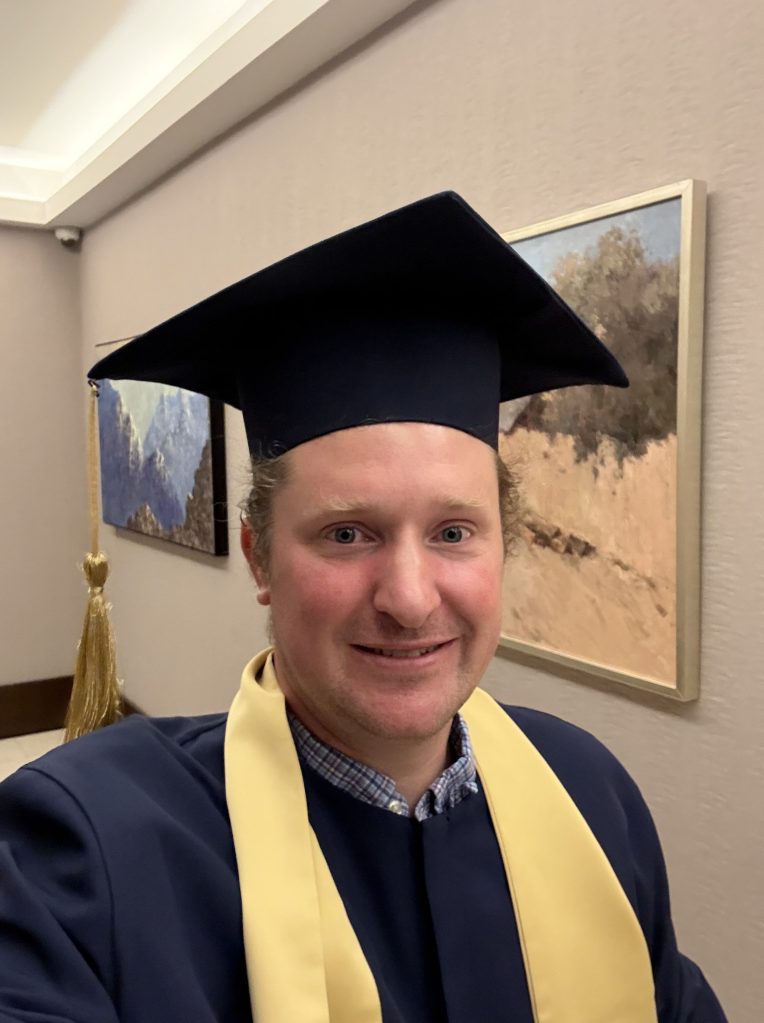
My recent visit to Tashkent was primarily a professional one. I was there in my role as an external examiner for a programme delivered through a partnership between TEAM University and London South Bank University, meeting colleagues and the teaching team and attending the University’s graduation ceremony. It was also my first visit to Uzbekistan and, indeed, to Central Asia, providing an opportunity to explore a city and region about which I knew relatively little.
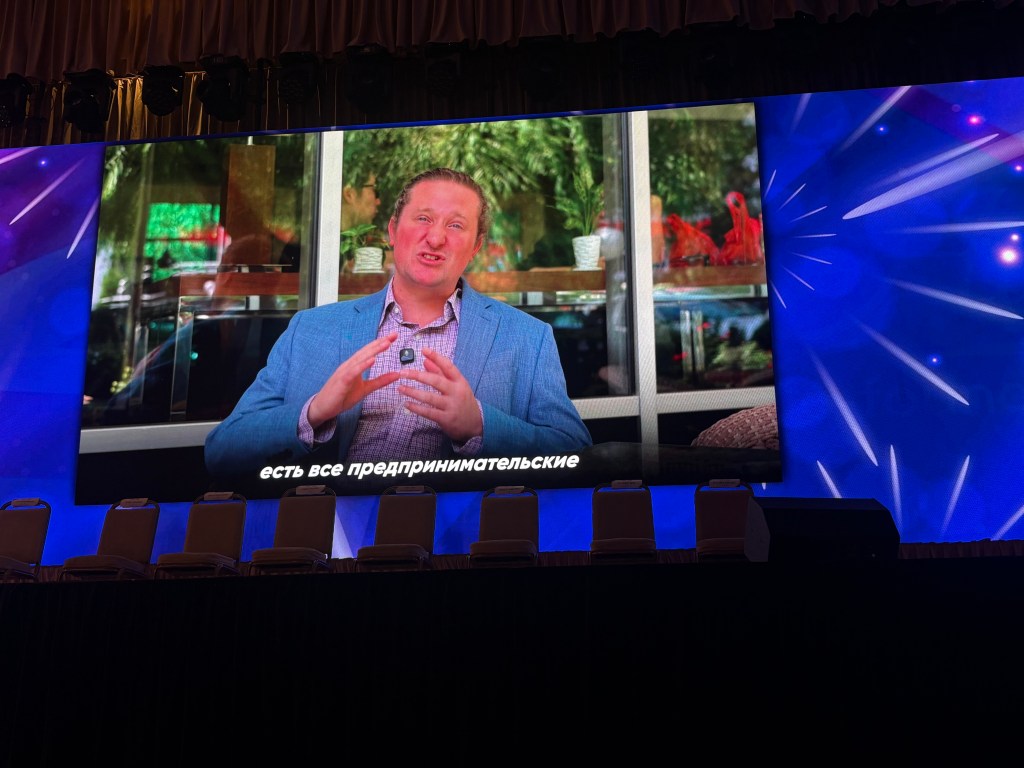
The graduation itself reflected the considerable effort that had gone into planning the event and making it feel inclusive. Earlier in the day, I had recorded a short message for the graduating students on the programme I externally examine, which was incorporated into the ceremony and played on the large screen behind the stage. It was nice to be included in the ceremony in this way, rather than simply attending it as an external examiner.
Having previously lived in Moscow, Kyiv and Beijing, perhaps inevitably I found myself making comparisons. Tashkent’s Soviet inheritance remains very visible in its broad avenues, monumental buildings and extensive public spaces. Yet the city has its own character. It feels orderly, well managed and respectful, but also warm. Despite its notably young population, it is visually more restrained than I had expected. Kyiv, for example, always struck me as considerably more colourful and visually expressive.
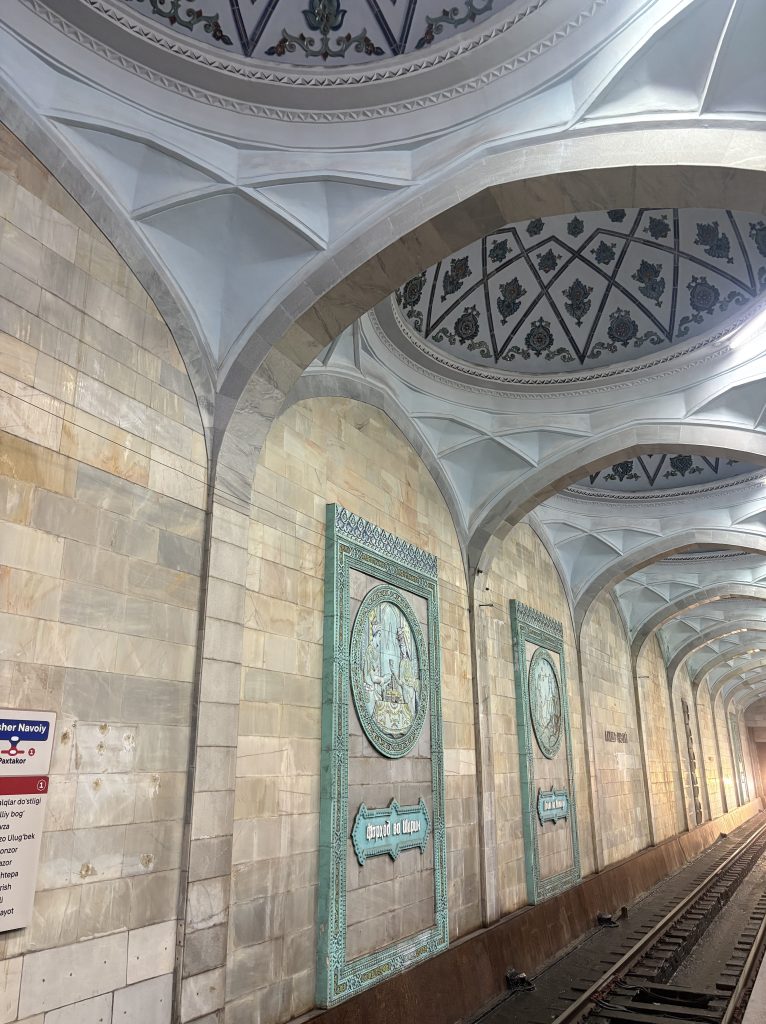
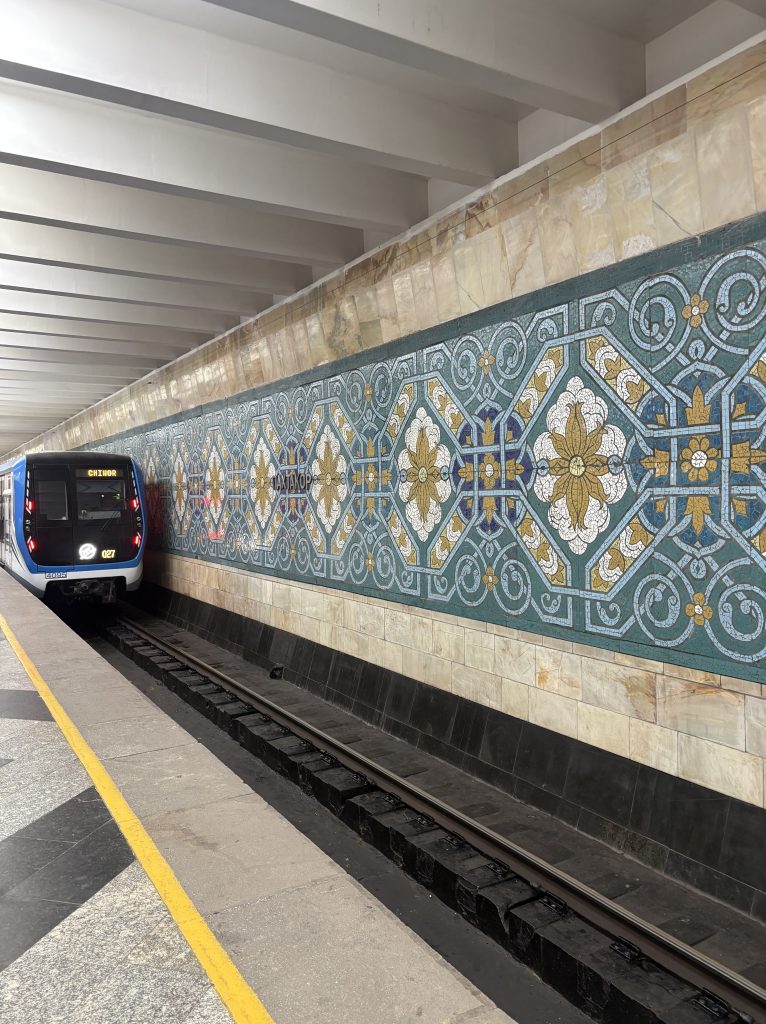
Nowhere was the Soviet inheritance more interesting than underground. Tashkent’s metro is rightly celebrated for its architecture. Stations are individually designed, with marble, chandeliers, mosaics and other decorative features that make travelling between them part of the experience of seeing the city.
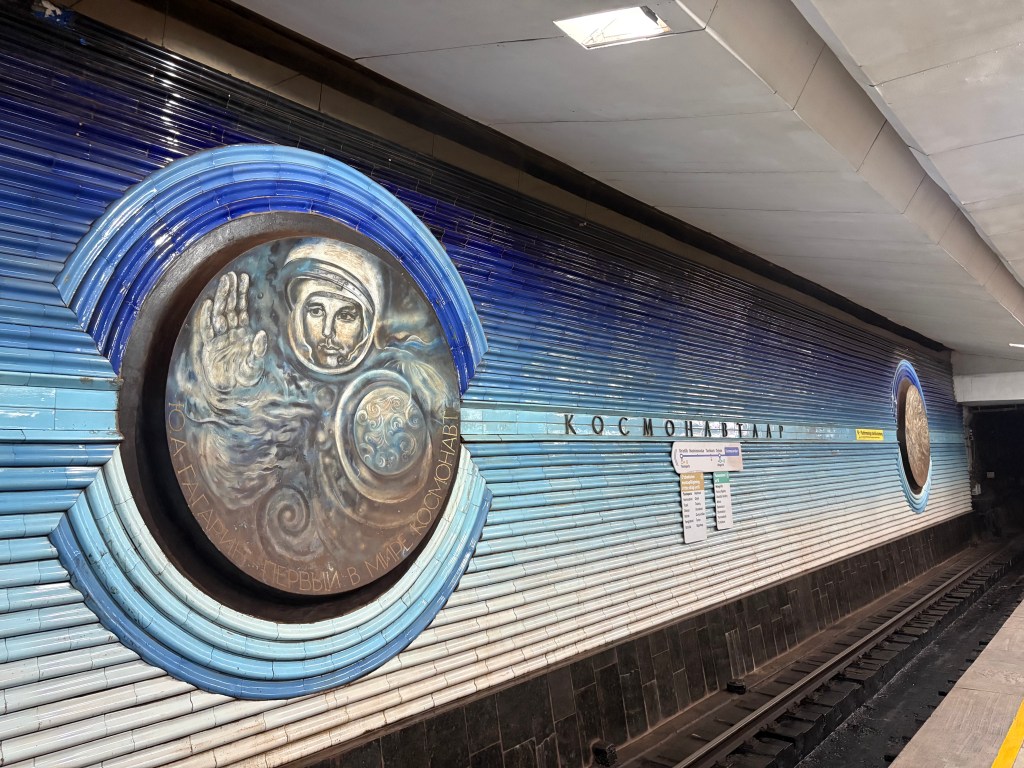
What interested me almost as much was how the metro operates. At the bottom of the long escalators are booths occupied by smartly uniformed employees, watching proceedings and occasionally giving passengers instructions through microphones. The number and visibility of staff were striking compared with what I am accustomed to seeing on the London Underground. Having lived in Moscow, this felt strangely familiar. It was another reminder that the legacy of the Soviet period can be found not only in architecture, but also in aspects of how public infrastructure operates.
What is particularly striking is how inexpensive the system is to use. Both the metro and Yandex taxis make getting around remarkably cheap, particularly when compared with the cost of eating in restaurants.
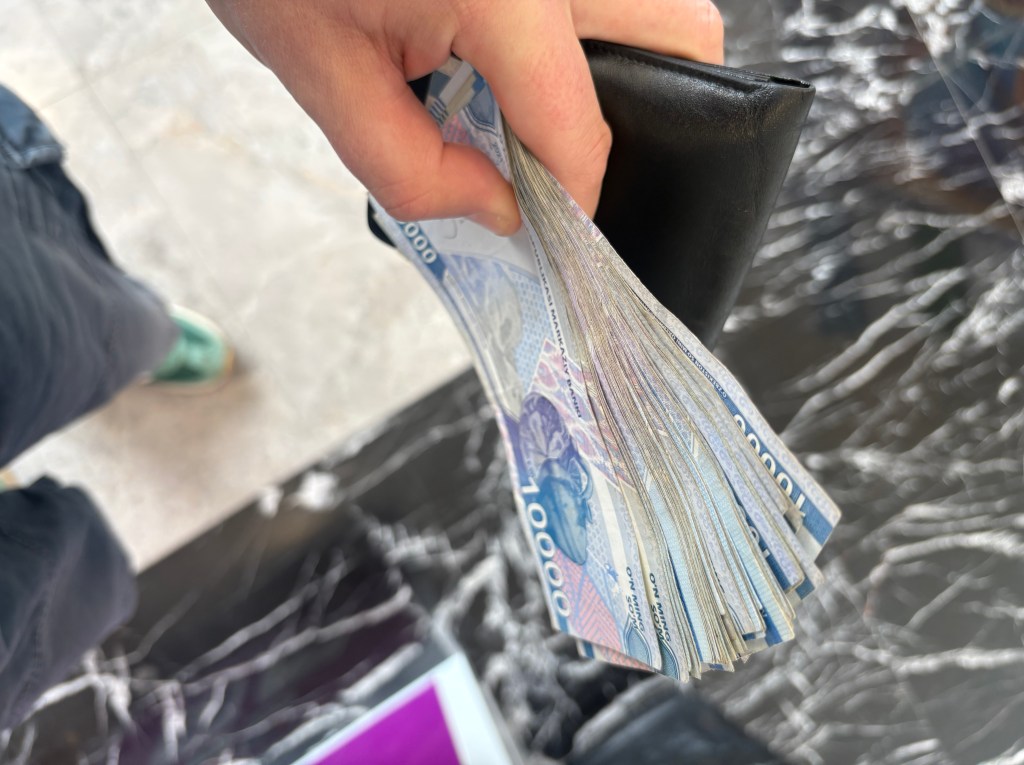
My introduction to Uzbek cash provided another lesson in relative value. Wanting some money on hand, I withdrew roughly £25 worth of Uzbek som from a cash machine. The machine proceeded to give me around forty 10,000-som notes, leaving me with the more immediate problem of how to fit them all into my wallet.
Old, New and Reconstructed Tashkent
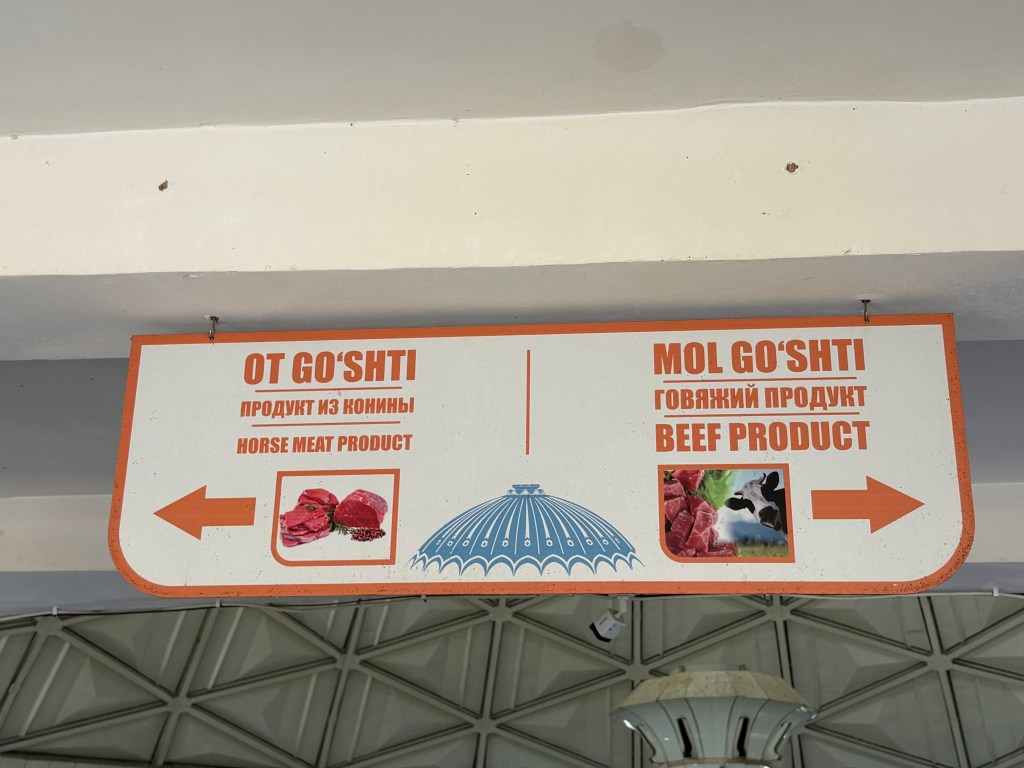
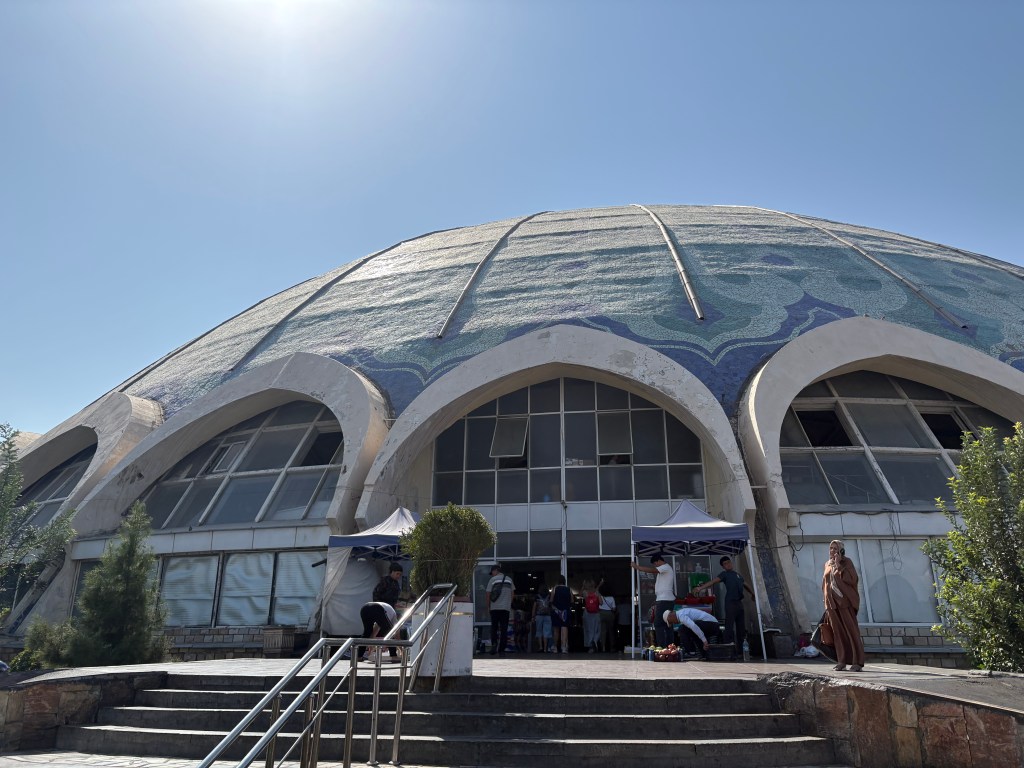
Chorsu Bazaar was one of the more memorable places I visited. It is busy, functional and remarkably direct, with signs, stalls and displays making it immediately obvious what is being sold. I was also struck by the quantity of horse meat on sale. It was not presented as something unusual or exotic, but simply as an ordinary part of the market, despite being a luxury in some parts of the world.
The streets around some of Tashkent’s historic sites provided quite a contrast. Considerable effort has clearly gone into reconstruction and restoration, particularly around the old city and Hazrati Imam. As a visitor, however, I was sometimes unsure what lay behind the attractive façades. There was often relatively little signage, window display or outward-facing indication of what businesses were selling. This surprised me given the proximity of some of Tashkent’s principal attractions and contrasted strongly with the direct commercial environment of Chorsu.
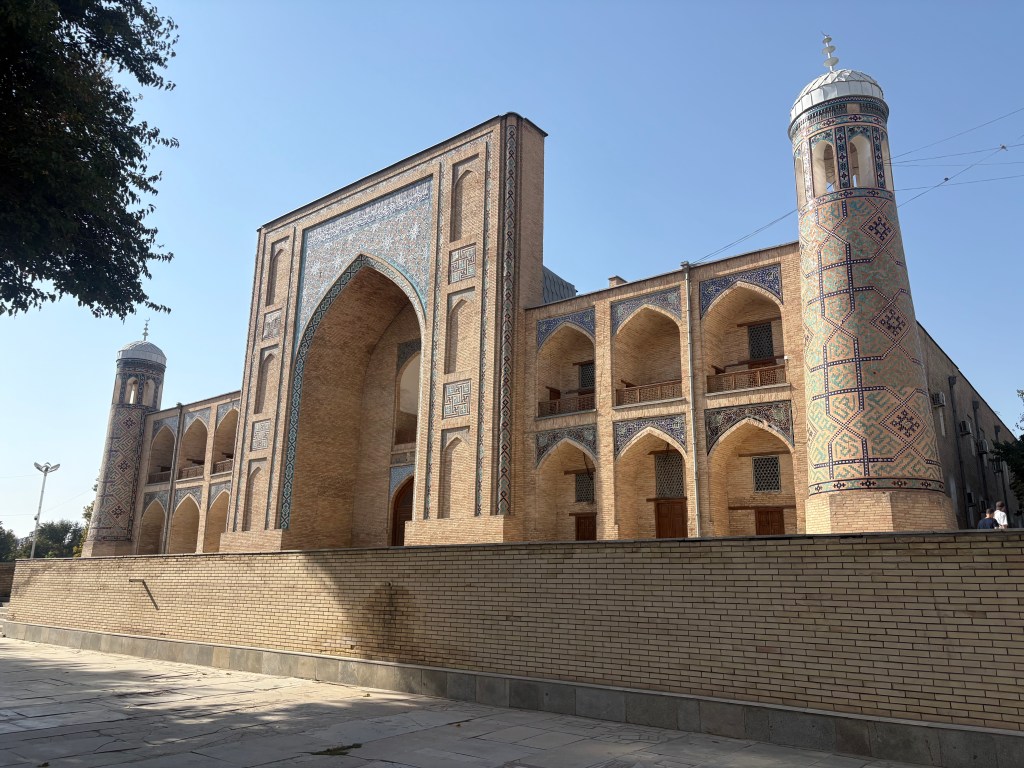
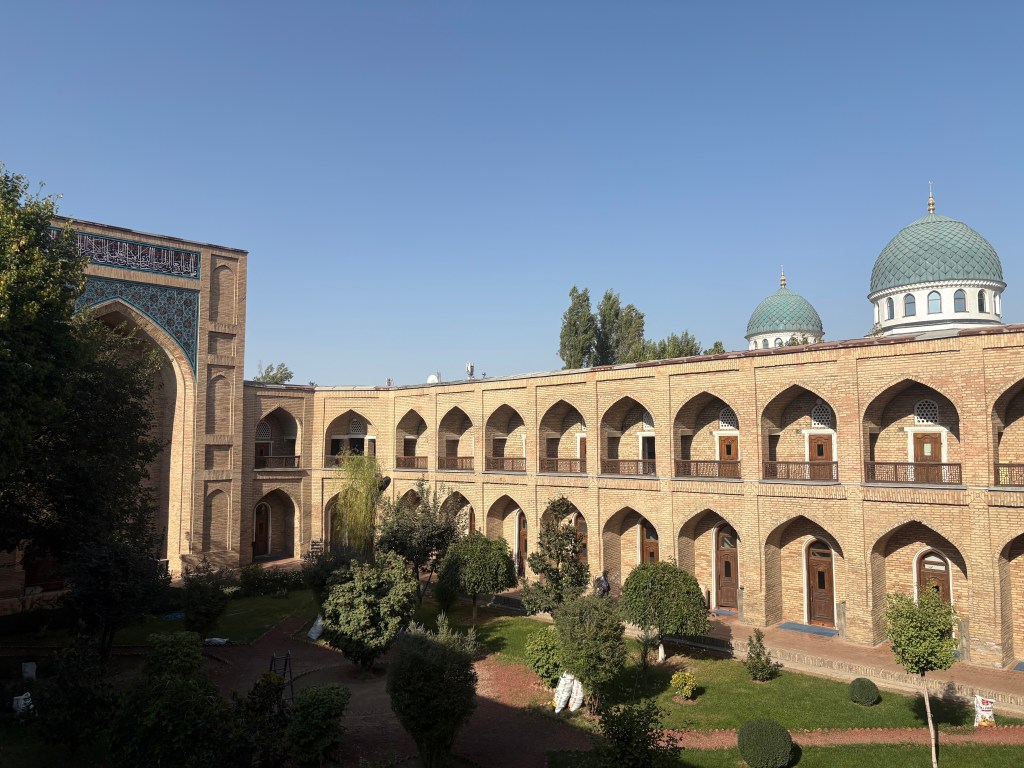
The Islamic architecture was one of the unexpected pleasures of exploring this part of Tashkent. Having never previously visited Central Asia, I found some of it strangely familiar. The pointed arches, geometric patterns and turquoise tilework occasionally reminded me of Moorish architecture, even though its roots are distinctly Central Asian.
That impression became particularly strong at Kukeldash Madrasah. Passing through its monumental entrance into a quiet internal garden, surrounded by arcades and pointed arches, reinforced the association. It was an interesting reminder of how, when encountering an architectural tradition for the first time, we inevitably interpret aspects of it through places and styles we already know.
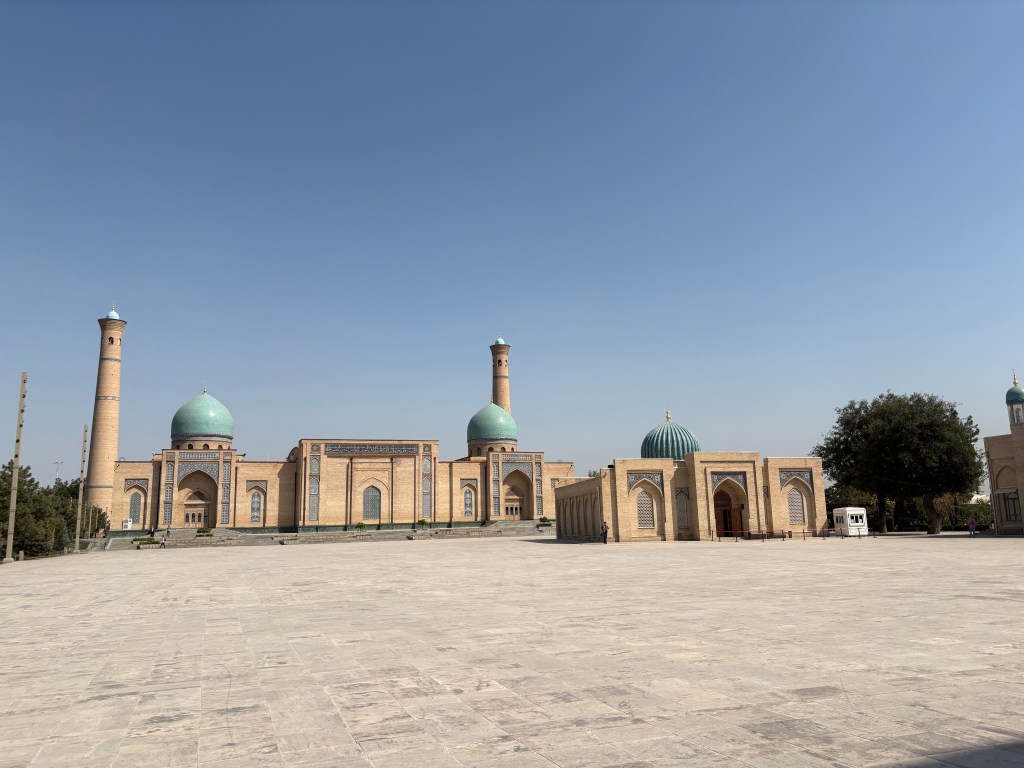
The contrast between old and new became particularly apparent at the recently opened Center for Islamic Civilization. I had already visited the neighbouring Hazrati Imam complex independently and seen the Center from outside, but later had the opportunity to explore the Center itself.
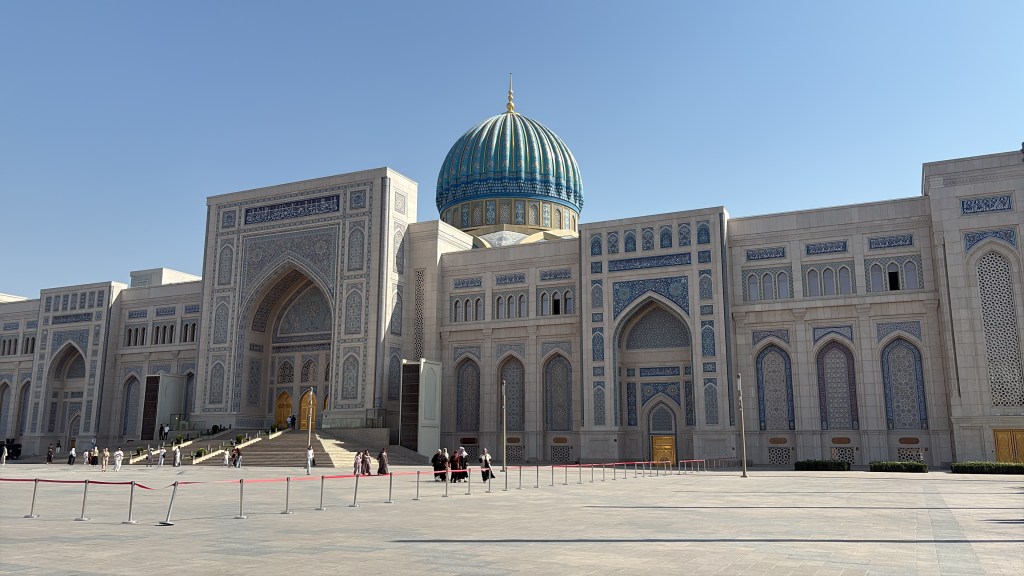
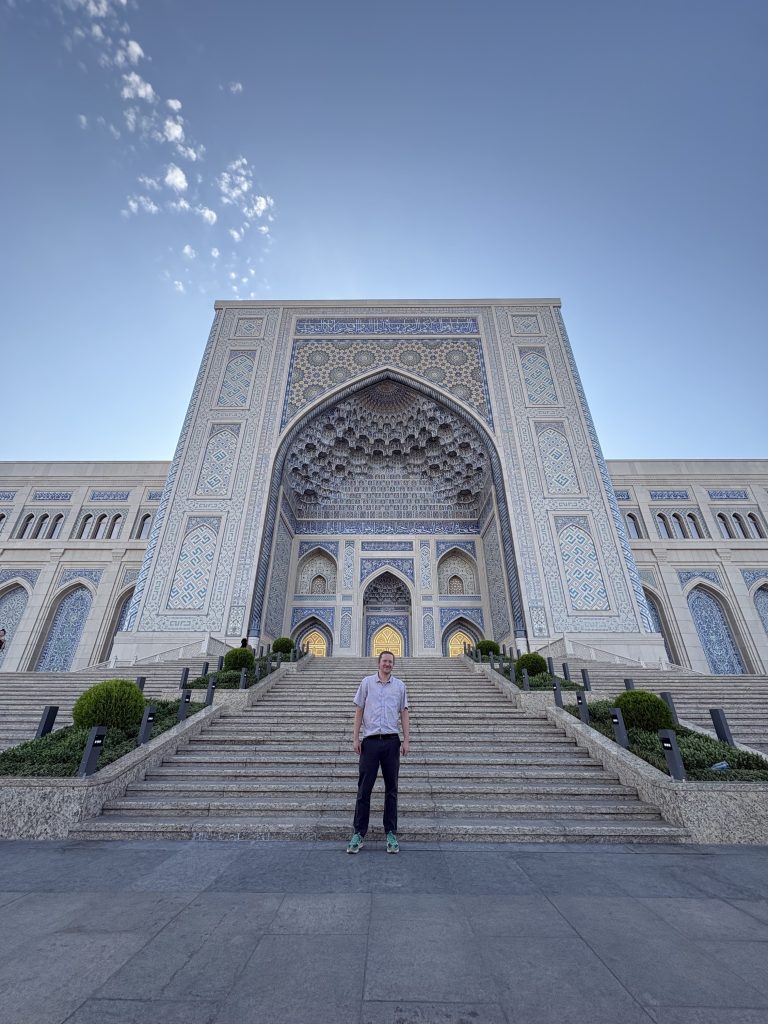
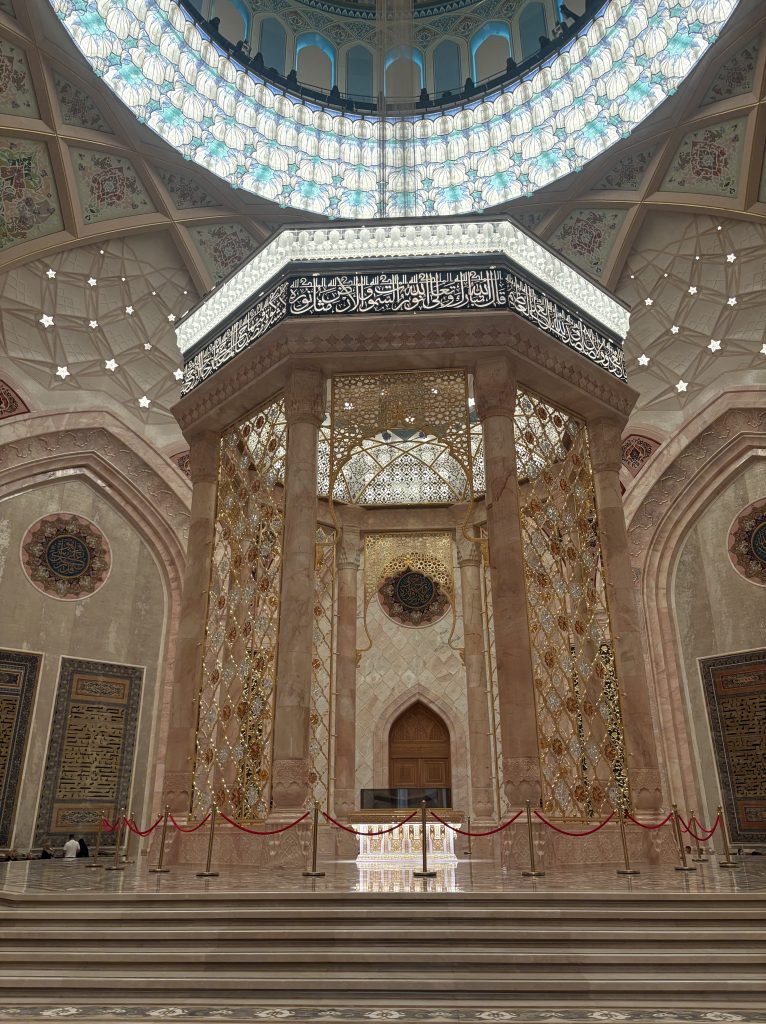
What struck me most inside was the sheer breadth of history brought together. The exhibitions move across different periods and generations, connecting religious history with scholarship, science, culture and the development of the region. Manuscripts and historical objects sit alongside reconstructions, digital displays and other interactive elements.
For someone visiting Central Asia for the first time, I found this fascinating but difficult to take in fully in a single visit. Many of the people, periods and connections were new to me, and the exhibitions covered a much longer and richer history than I had appreciated before arriving in Uzbekistan. I left wanting to read more about several of the periods and figures I had encountered.
If I visited again, I would do some reading beforehand on the broad chronology of Central Asian and Islamic history. This would provide a framework for linking the many people, periods, exhibits and ideas together. In that respect, the visit succeeded in doing something particularly valuable, it made me want to learn more.
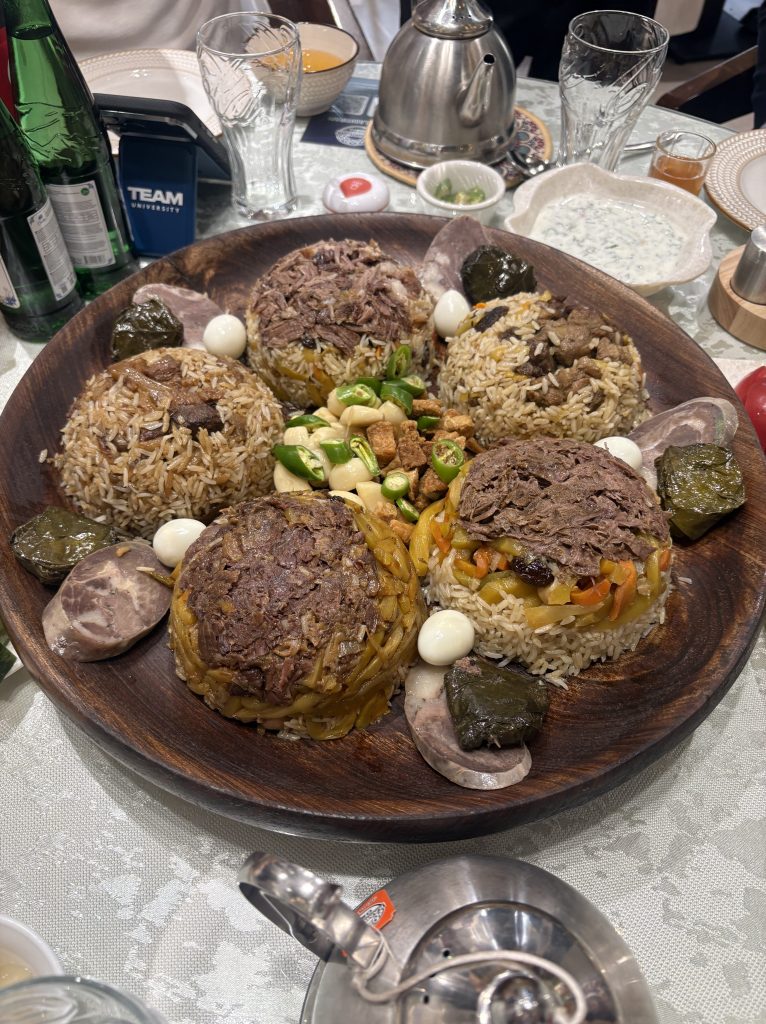
My time in Tashkent also provided opportunities to experience aspects of Uzbek culture beyond the major sites. After meetings with colleagues, we shared several different versions of plov for lunch. I had expected Central Asian food to be strongly flavoured and perhaps quite spicy. What I found was more subtle, but with quite distinct flavours. Trying several types of plov alongside one another made the differences in the rice, meat and preparation particularly noticeable.
Other differences emerged through much more mundane experiences. Restaurants frequently seemed to employ remarkably large numbers of staff while service remained relatively leisurely. Sugar-free soft drinks could be surprisingly difficult to find, with Coke Zero often the only option and by no means universally available. Even in temperatures above 30°C, soft drinks sometimes arrived much closer to room temperature than I would have expected.
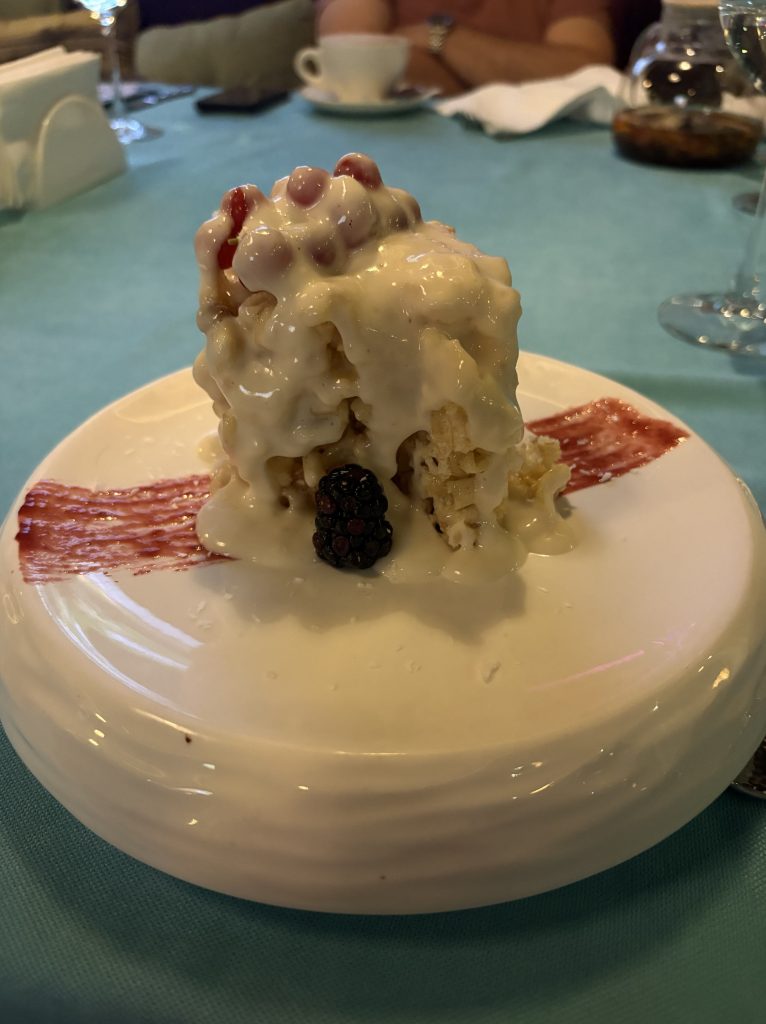
Desserts proved interesting and distinctive. Chak-chak was particularly memorable. Mine arrived beneath a generous creamy topping and initially looked remarkably like a small mountain of macaroni cheese. Fortunately, it tasted nothing like one.
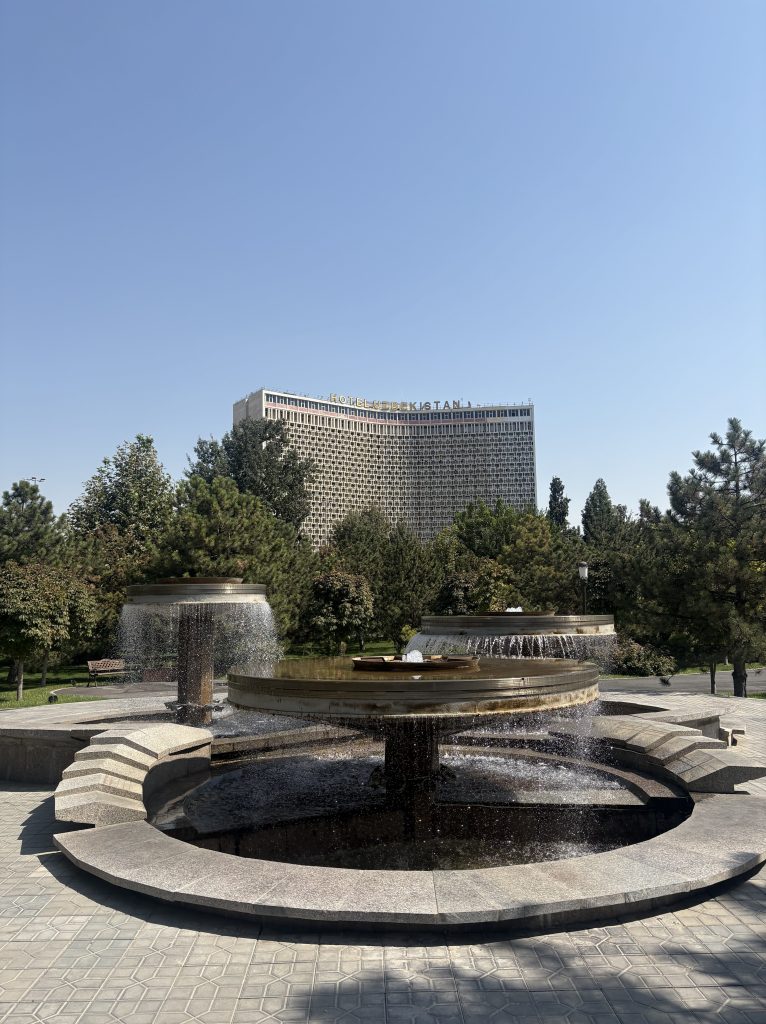
These small observations often shape an impression of a place as much as the major sights. Tashkent did not conform neatly to my expectations of either Central Asia or a post-Soviet capital. It combines monumental Soviet architecture with intricate Islamic buildings, reconstructed historic streets and ambitious new cultural projects. It is visually quite restrained, yet I found it welcoming, with a noticeable sense of order, respect and decorum in public life without this translating into coldness.
My reason for being in Tashkent was ultimately higher education rather than tourism. Meeting colleagues involved in the programme, discussing its delivery and teaching, and attending graduation gave the visit a professional context while also providing an opportunity to understand a little more about a country and region I had not previously visited.
There was also one final unexpected piece of familiarity. Both my first journey from the airport and my final journey back were in Chevrolet Matiz cars booked through Yandex. Having owned one myself around 19 years ago, it was an amusing coincidence with which to begin and end my first visit to Uzbekistan.
Coming Home
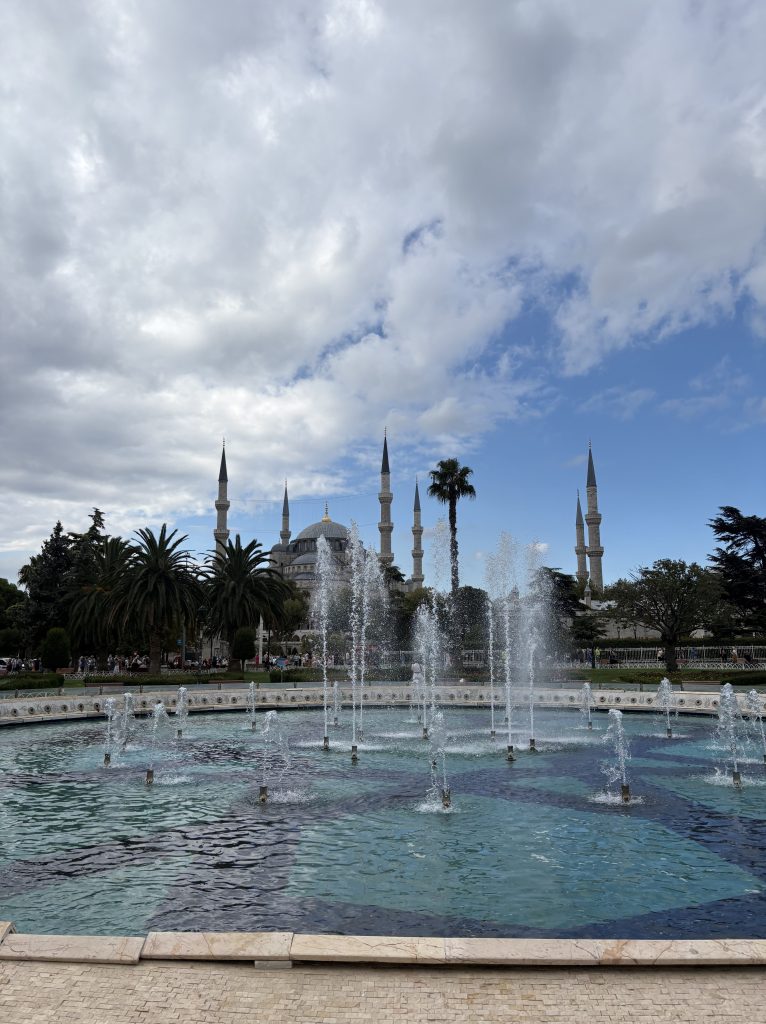
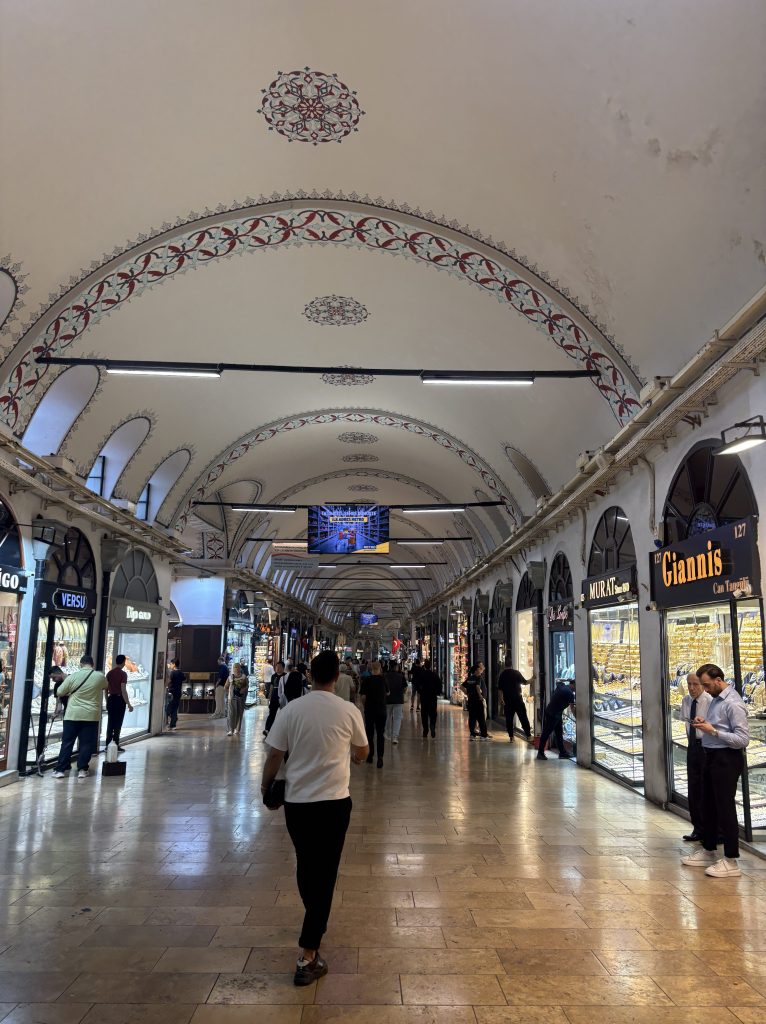
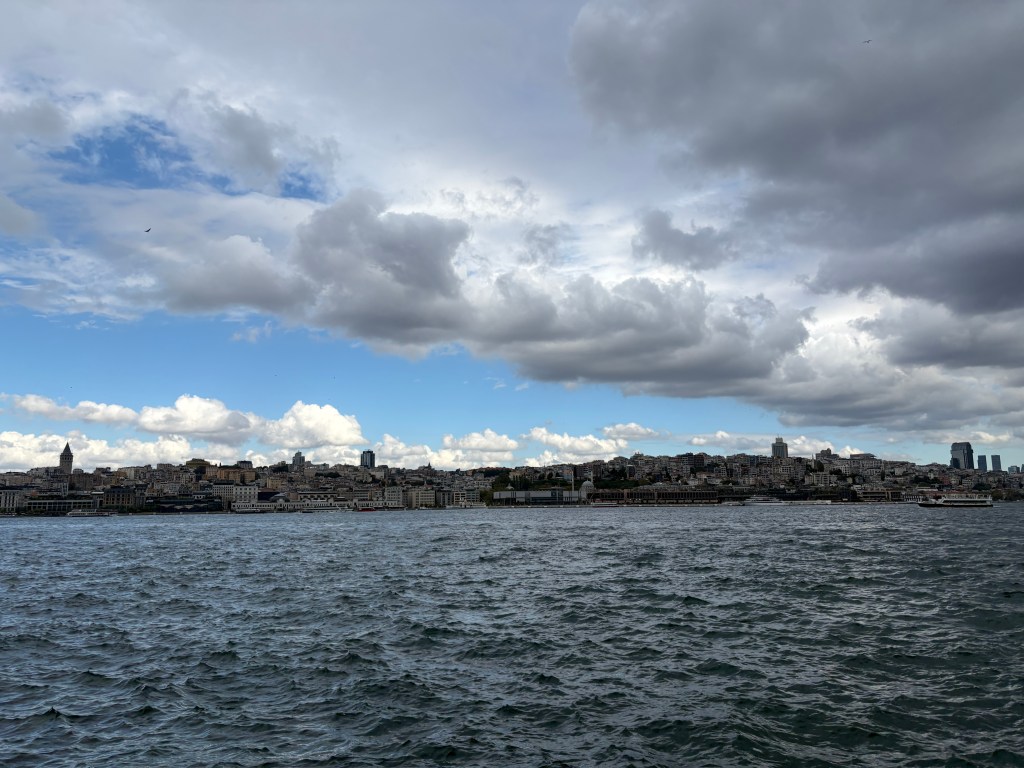
The journey home then provided an unexpected extension to the trip. My connecting flight from Istanbul to London Heathrow was oversold, resulting in an additional 24 hours in Istanbul. Unlike Tashkent, Istanbul is a city I already know well, so there was no particular pressure to see or discover anything new. Between online meetings that I had expected to take from home, I had the opportunity to walk through the Grand Bazaar and Sultanahmet Square, past Topkapı Palace and its gardens, and down towards the waterfront. After several days encountering somewhere entirely new, it was an enjoyable and rather unexpected way to finish the trip in a city that already felt familiar.