Dublin Keynote

October was a busy month for travel, with DBA teaching in Bielefeld and a trip to Istanbul, but a real highlight was the opportunity to deliver a keynote on entrepreneurship education and AI at the Entrepreneurship Education Share and Learn Symposium hosted by Dublin Technological University. AI in entrepreneurship education has developed rapidly in recent years, and it has been interesting to watch the field progress since my early work in the area, when I published the first paper on AI and entrepreneurship education in an established journal. Editing a forthcoming case collection book on AI and entrepreneurship has also provided valuable insights into how AI is being used in practice and what this means for teaching, which I was delighted to share.

My keynote explored how artificial intelligence is reshaping both entrepreneurship and entrepreneurship education. I discussed why students now need to understand AI’s influence on opportunity recognition, innovation processes, and decision-making, as well as the ethical and governance challenges it presents. The session examined the core competencies entrepreneurship students now require, including data literacy, digital fluency, prompt engineering, and the ability to critically evaluate AI-generated outputs.

I also highlighted how the subjective and non-linear nature of AI reinforces the value of constructivist and reflective approaches to teaching, helping learners to question, interpret, and apply AI responsibly. Finally, I explored why entrepreneurship educators are uniquely positioned to embed AI into the curriculum and prepare students for an entrepreneurial landscape increasingly shaped by AI-driven tools and capabilities.

Unfortunately, I was too busy during the event to take any photos, but I did manage to capture a few during my short time exploring Dublin. And, amusingly, the Christmas displays were already up, despite it being the end of October.

Hangzhou and Jinhua

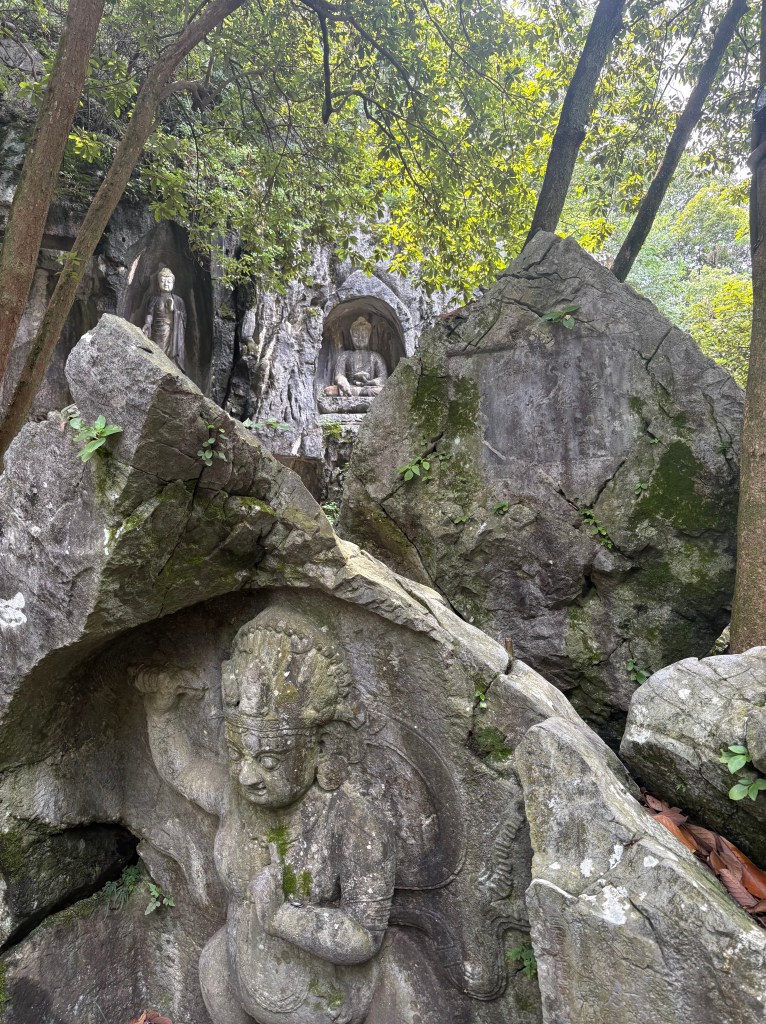
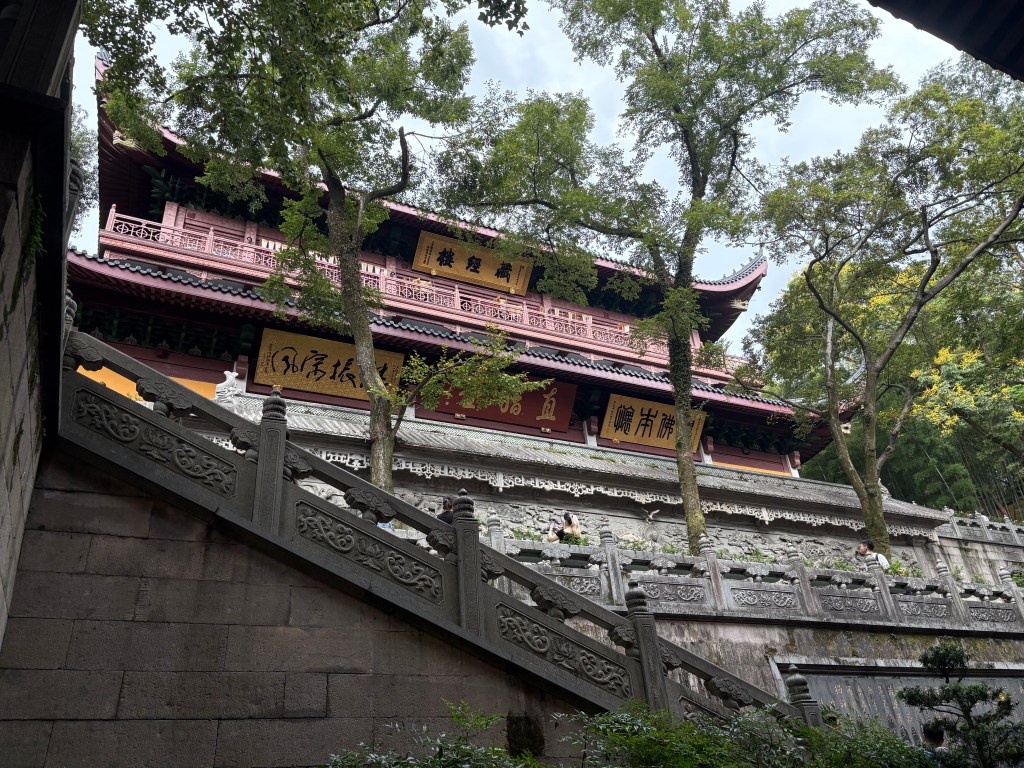
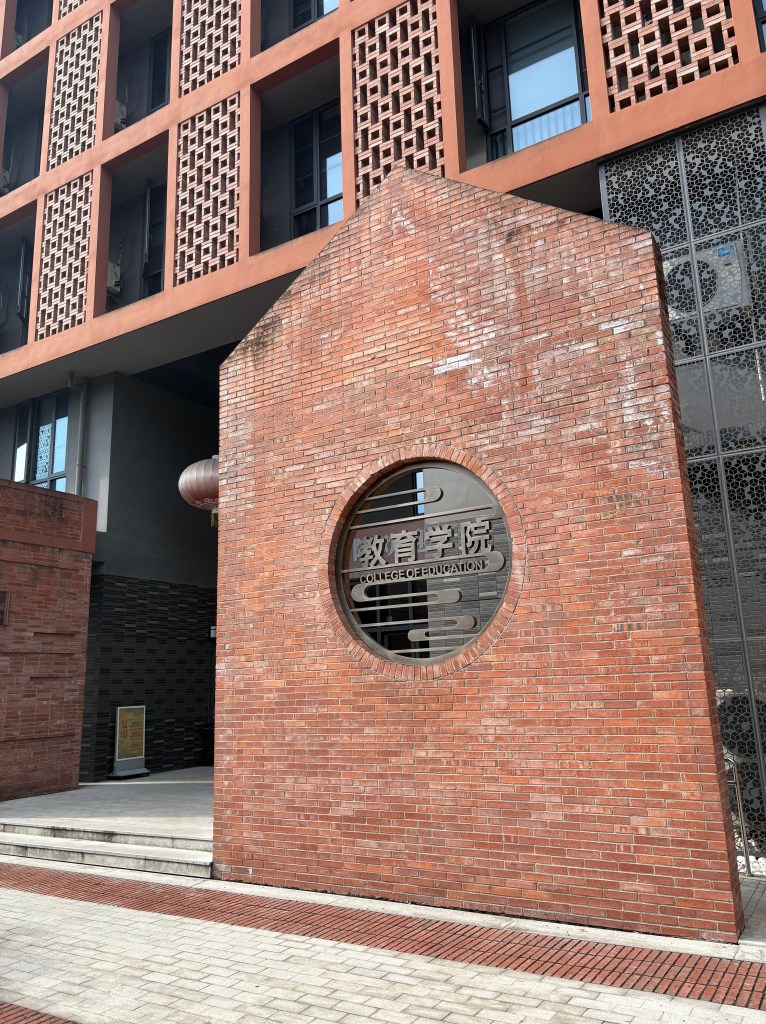
The second part of our trip took us to Zhejiang, with visits to both Hangzhou and Jinhua to see the Zhejiang Normal University campus. Hangzhou was a city I hadn’t visited before, so it was great to finally have the chance to explore. I walked around West Lake, visited Xiangji Temple, and wandered through the historic streets around Hefang. One of the highlights of the weekend was trekking up Lingyin Mountain and exploring the temple complex. I was caught in a torrential rainstorm while up in the mountains, but it didn’t dampen the experience, the afternoon still felt like a peaceful escape just outside the city. Hangzhou offers a wonderful blend of rich culture and tradition, modern infrastructure, and beautiful natural scenery right on its doorstep.

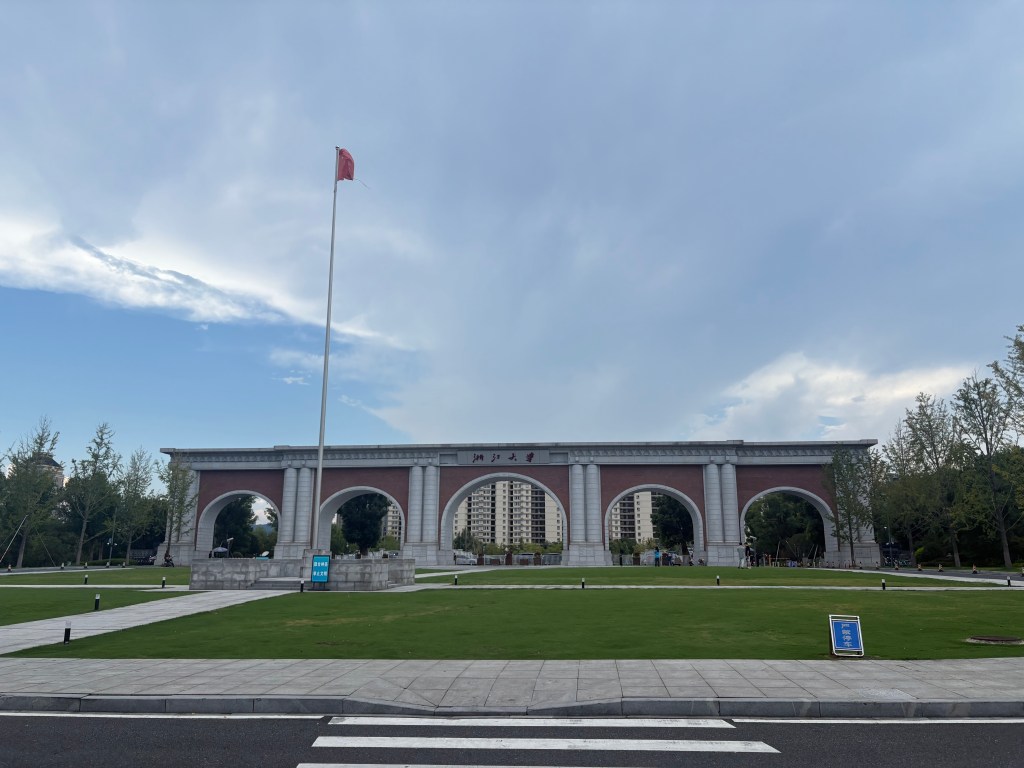
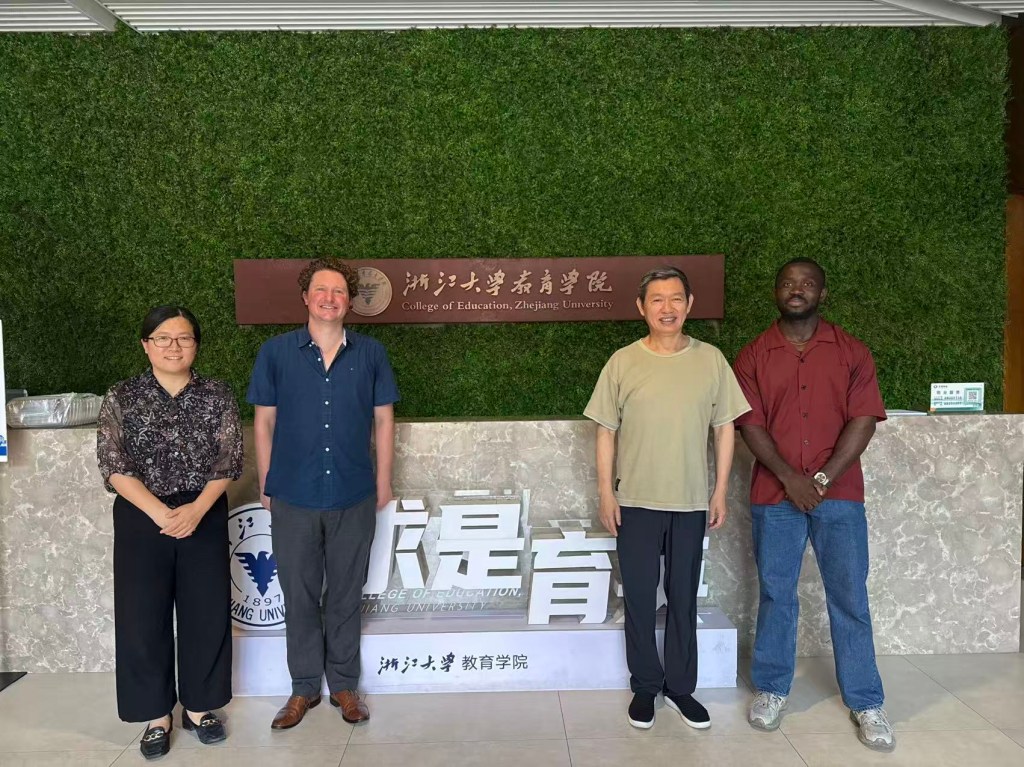
Being in Hangzhou gave me the chance to meet colleagues at Zhejiang University, which hosts the journal Entrepreneurship Education, where I serve on the Editorial Board. I also previously contributed to a book on Comparative Entrepreneurship Education led by colleagues there, but until now we had never met in person. It was therefore a real pleasure to finally visit Zhejiang University and connect with the team face-to-face.

After spending some time exploring Hangzhou, I attended meetings at Zhejiang Normal University’s Hangzhou campus, where we also met with parents of students on our dual-degree programme. From there, we travelled to the main Zhejiang Normal University campus in Jinhua. However, we soon found ourselves back in Hangzhou for an additional induction with a new group of students, which meant a fair bit of zipping back and forth between Jinhua and Hangzhou.

Jinhua is a great city to explore, affordable, easy to navigate, and, like Hangzhou, offering quick access to the surrounding mountains. This gave me the chance to visit the Shuanglong Scenic Area, with its caves, temples, and lakes. I went on a quiet day, which made the visit peaceful and serene; it felt like a completely different side of China compared to the bustling cities we’d been in the week before.

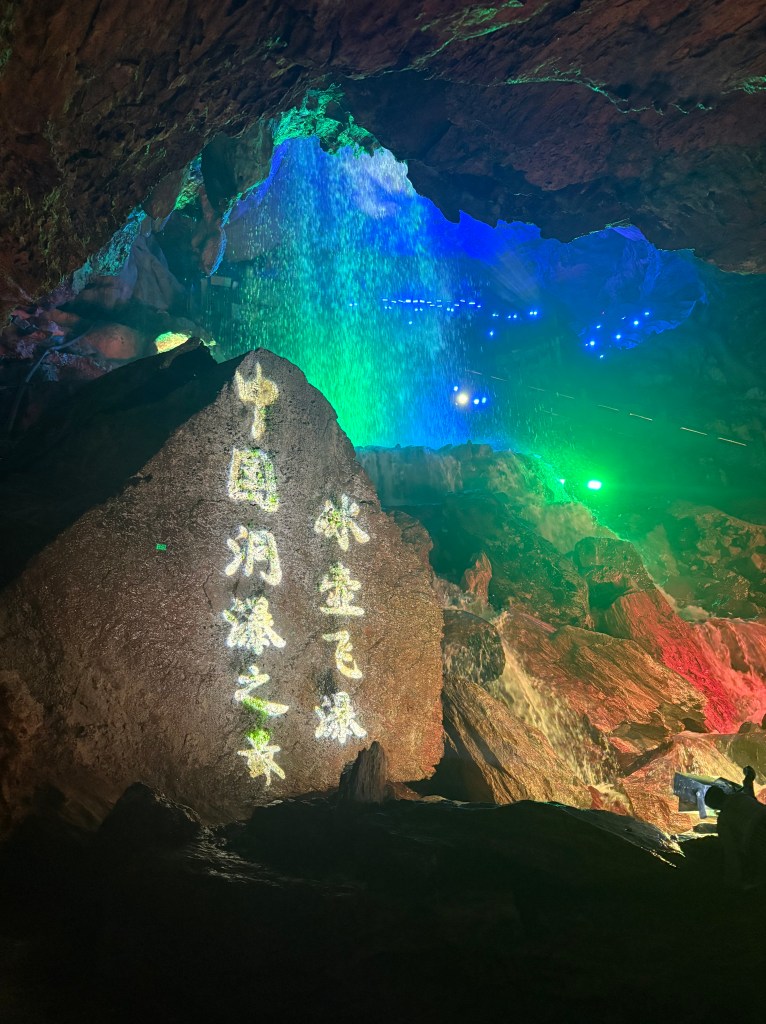
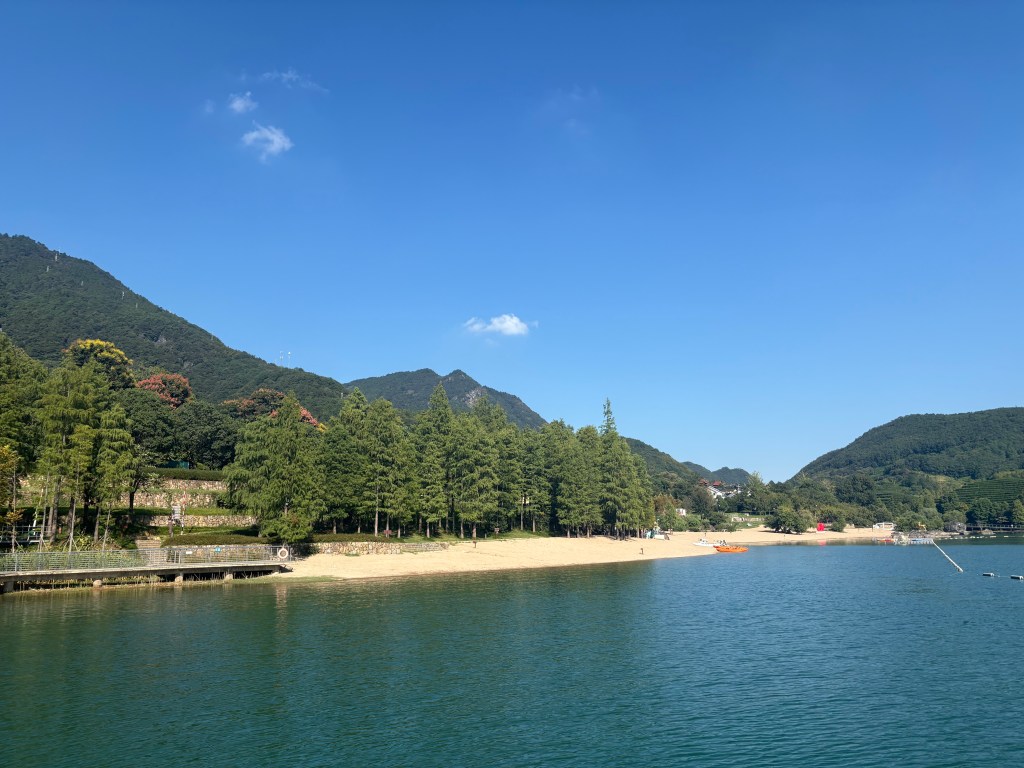
One of the main highlights was the Double-Dragon Cave (Shuanglong Cave), which you enter by lying flat in a small boat to pass through a very low opening, a slightly claustrophobic squeeze before the cavern opens up to reveal beautiful waterfalls inside. Even so, the best part may have been simply walking through the natural landscape around the Lunv Lake, tea plantations, and temples, breathing in the mountain air. It was a memorable and refreshing contrast to the busier parts of the trip. In the evenings, I was able to visit Guzi City (Guzicheng) and Wanfo Pagoda, the historic old town area of Jinhua set along the riverside. This made for a nice break between lesson observations and meetings with our registered lecturers at Zhejiang Normal University.

After leaving Jinhua, we headed to Nanchang for the final leg of our trip to visit Nanchang Hangkong University.

Shanghai and Jinan  

September brought a bonus trip to China. With several programme changes and negotiations underway across our China partnerships, I had the opportunity to visit our existing MoE dual-degree partners, explore potential new collaborations, and meet with research colleagues. Given the current restrictions and freezes on conference budgets, I’m grateful that these visits still allow me to connect meaningfully with colleagues and maintain research links.

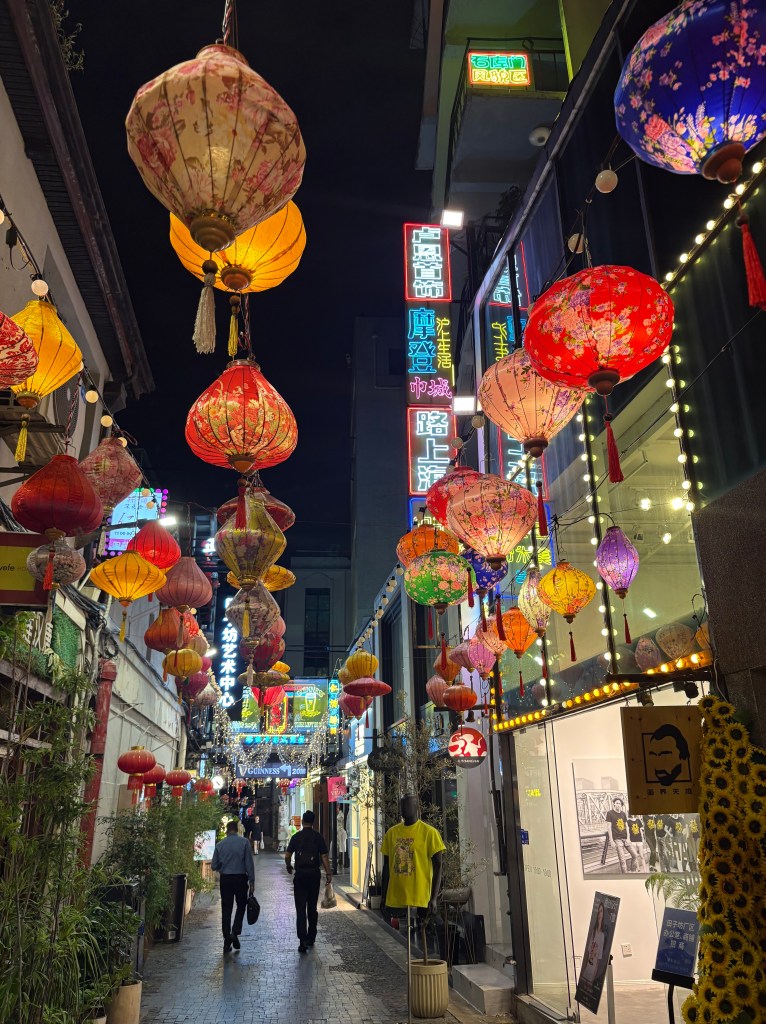
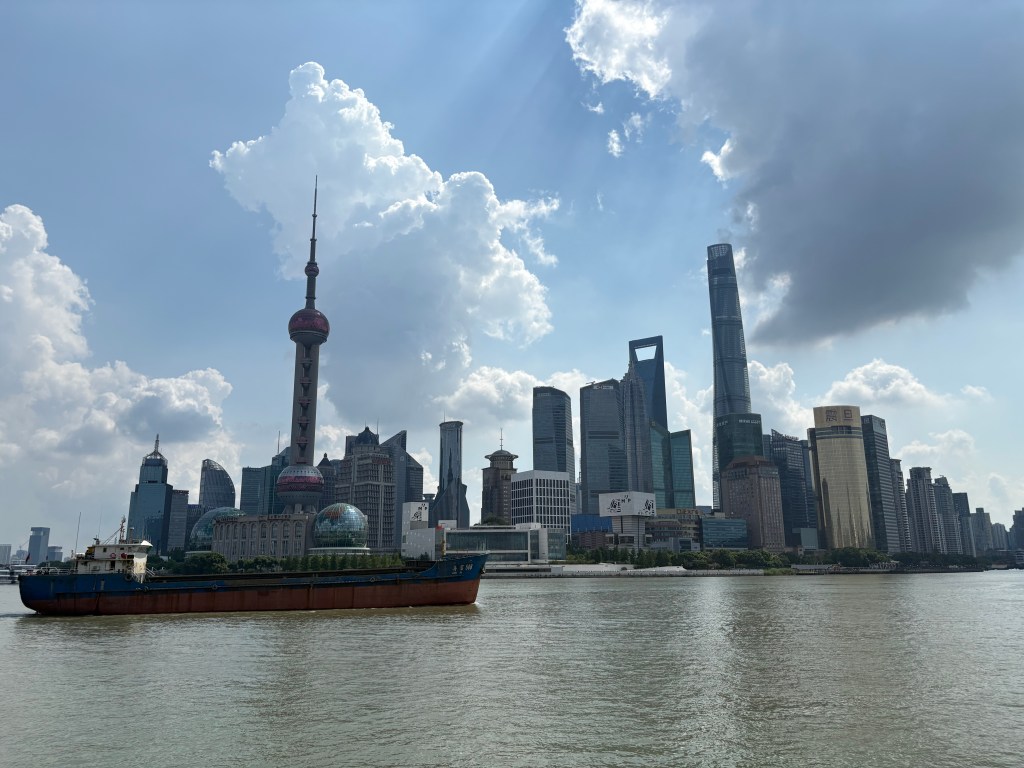
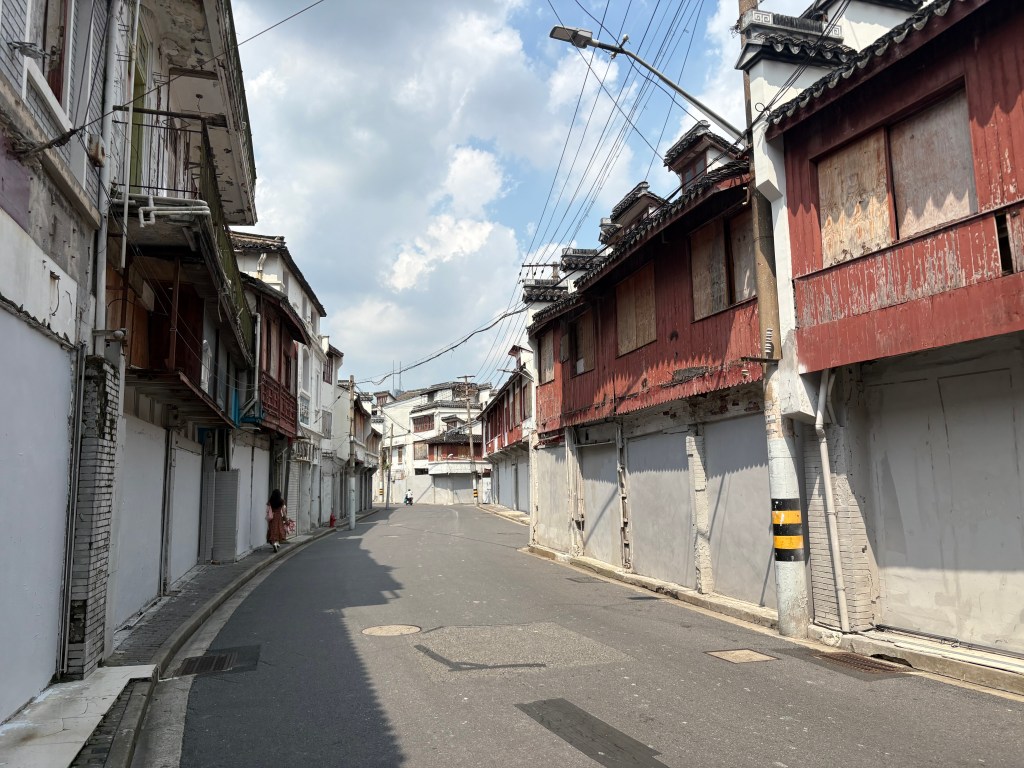
Although the trip to China largely mirrored my previous visit, the order was reversed, meaning we began in the south. This meant flying into and starting in Shanghai rather than Beijing. As a result, I wasn’t able to revisit my usual Beijing haunts. However, despite passing through Shanghai many times over the past few years, I haven’t actually spent any real time there since leaving China in 2017. Having a few nights in Shanghai was therefore very welcome, giving me the chance to explore the city again. My three nights in Shanghai were reduced to two after a missed connection in Frankfurt, but it was still enough time to visit the French Quarter for a drink, walk along The Bund, and explore Shanghai Old City. I was surprised to find much of the Old City boarded up for large-scale redevelopment, so it didn’t have the buzz I was expecting, though the City God Temple remains, alongside some of the newer developments. After my bit of sightseeing, I headed to East China Normal University for meetings.

Next it was off to Jinan and the Shandong University of Science and Technology—the partner I know best and have spent the most time with. Being back meant I could visit my ‘Beer Man’, who, amazingly, still remembers me and my usual order. While there, we attended the formal opening ceremony and met parents. The ceremony required a white shirt, which led to a quick dash to the market, as I generally avoid packing white shirts—especially for month-long trips. Because I know Jinan so well, I was able to make the most of my evenings, wandering around the springs, Daming Lake, and Thousand Buddha Mountain.

After Jinan we headed to Zhejiang to visit Hangzhou and Jinhua.

Shandong, Nanjing, and Nanchang

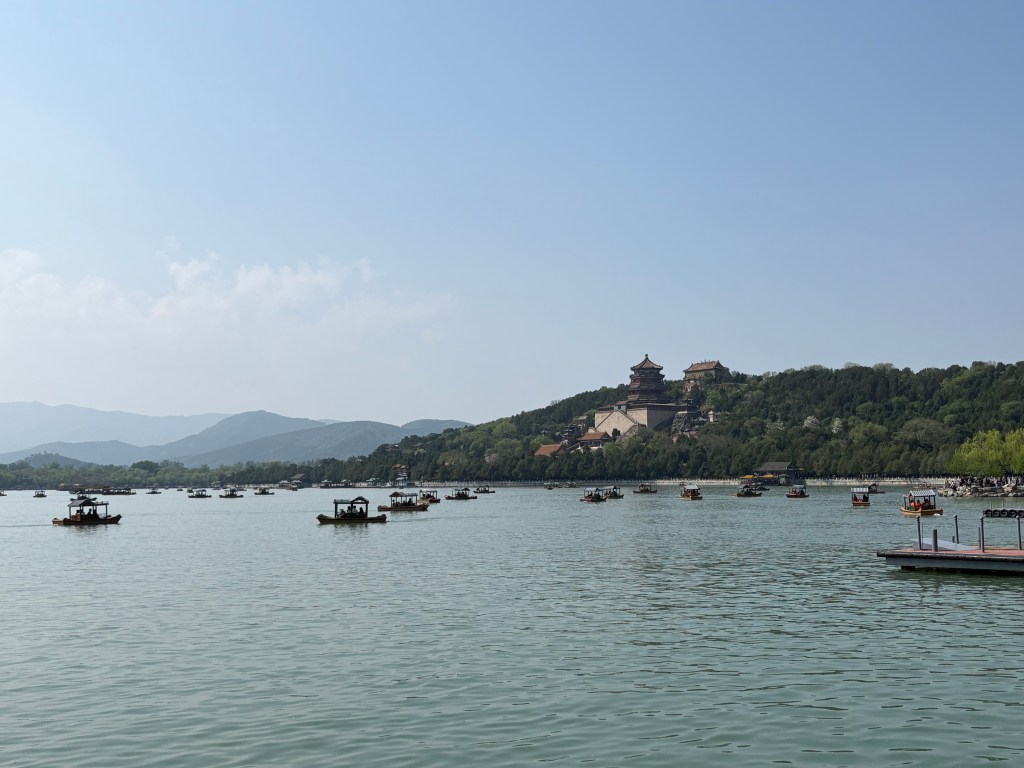
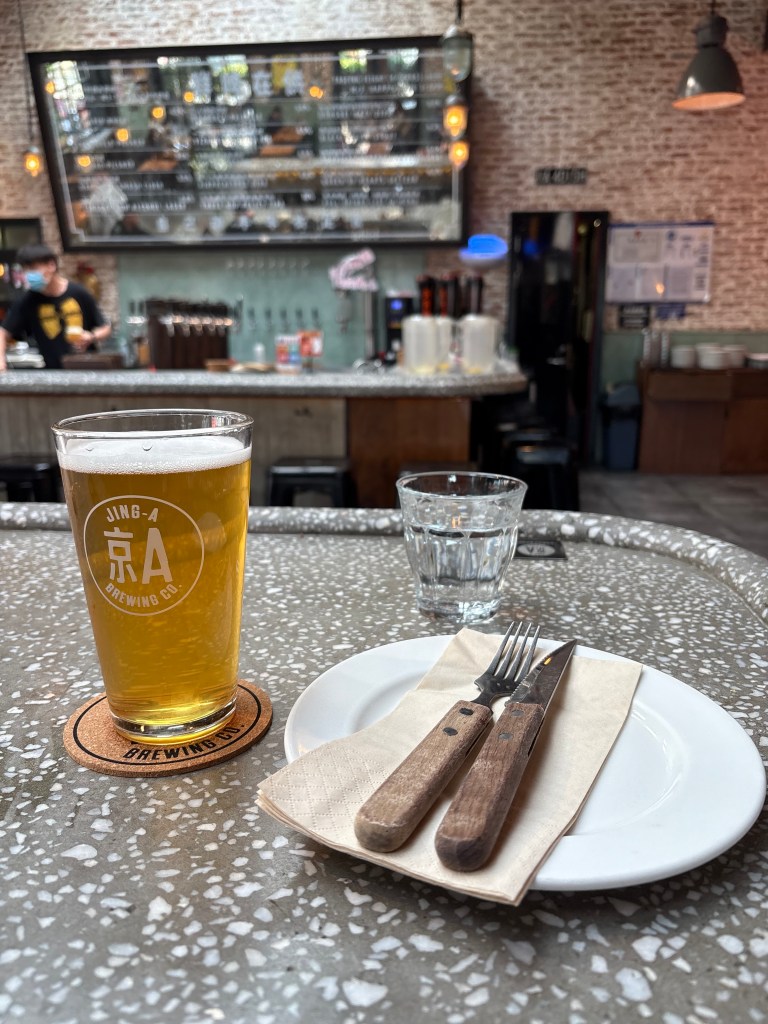
Another year, another visit to China. My excursions to China have become far less regular than they were prior to Covid, moving away from near monthly trips. This makes each journey more intriguing and provides a time to reflect more on each trip. This trip included visits to Shandong University of Science & Technology and Nanchang Hangkong University, but first I spent some time in some of my favourite haunts in Beijing. On the afternoon of my arrival, I went to the Old and New Summer Palaces, as well as Houhai Lake. During the walk, I stopped by Jing-A to reminisce about Friday nights in the past, as well as the new Slow Boat in Liangmaqiao, which did not exist when I lived there. 

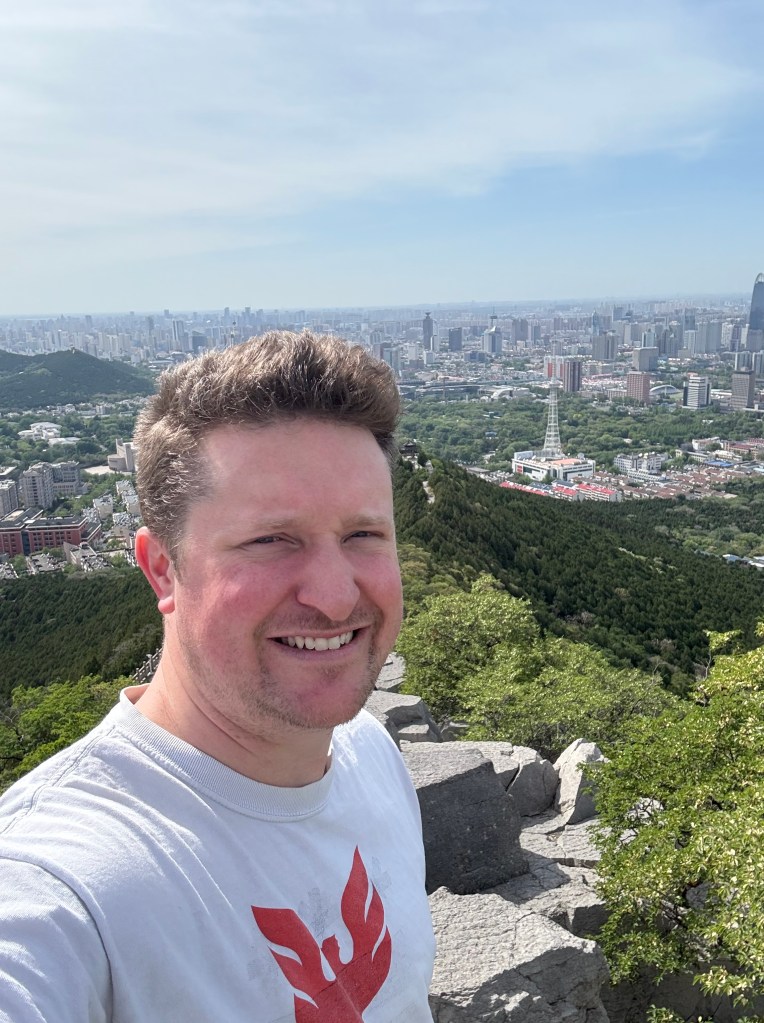
Following my time in Beijing, I travelled to Jinan to spend five days at Shandong University of Science & Technology. I’d been to Jinan numerous times before, but I tried to make time for activities I had done less often. This includes a full loop around Daming Lake and a walk to the summit of Thousand Buddha Mountain in Qianfoshan National Park. When I reached the top of the mountain, I took the luge down through the park. After a few meetings and sessions, it was offered to Nanchang via Nanjing.

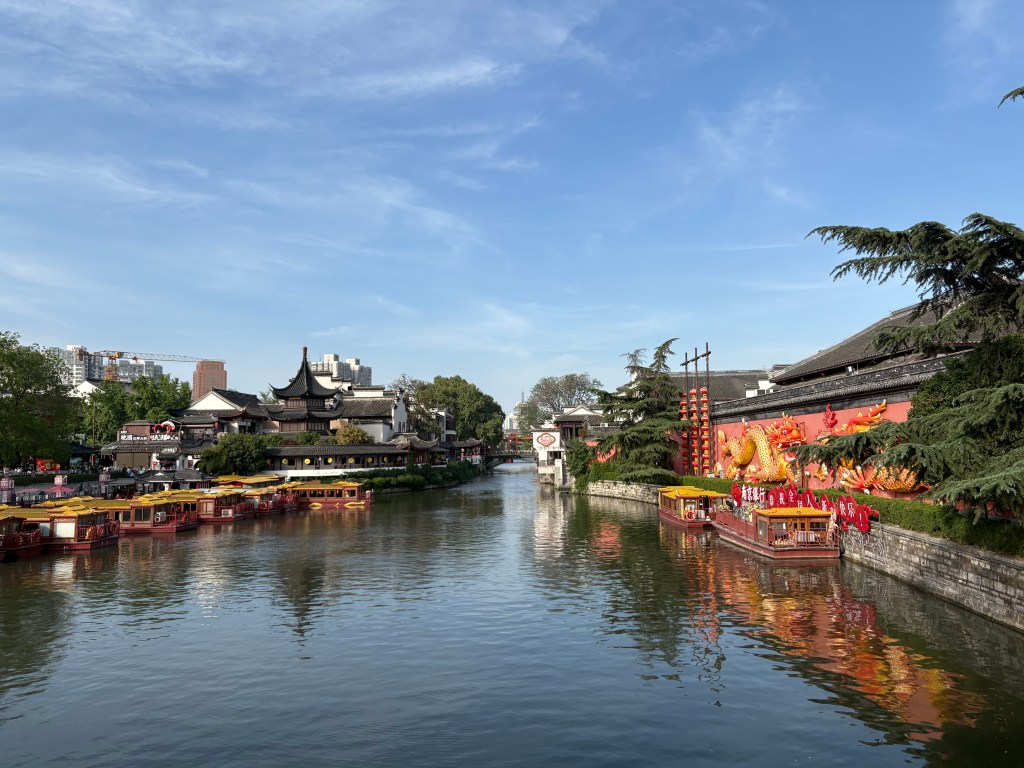
The one-night stop in Nanjing was carefully arranged to not only break up the route but also to allow me to meet up with my friend and colleague, Jun Cui. This allowed us to discuss revisions to the current paper we’re working on as well as potential future projects. After a quick lap around a few landmarks in Nanjing, it was back on the train to Nanchang.

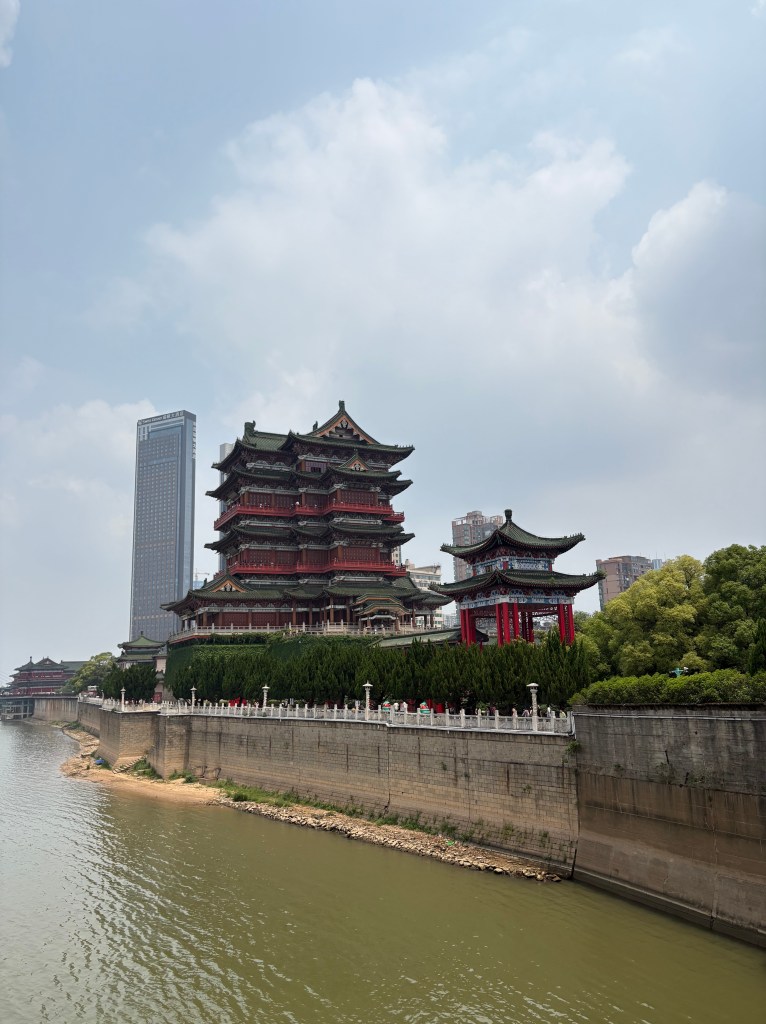
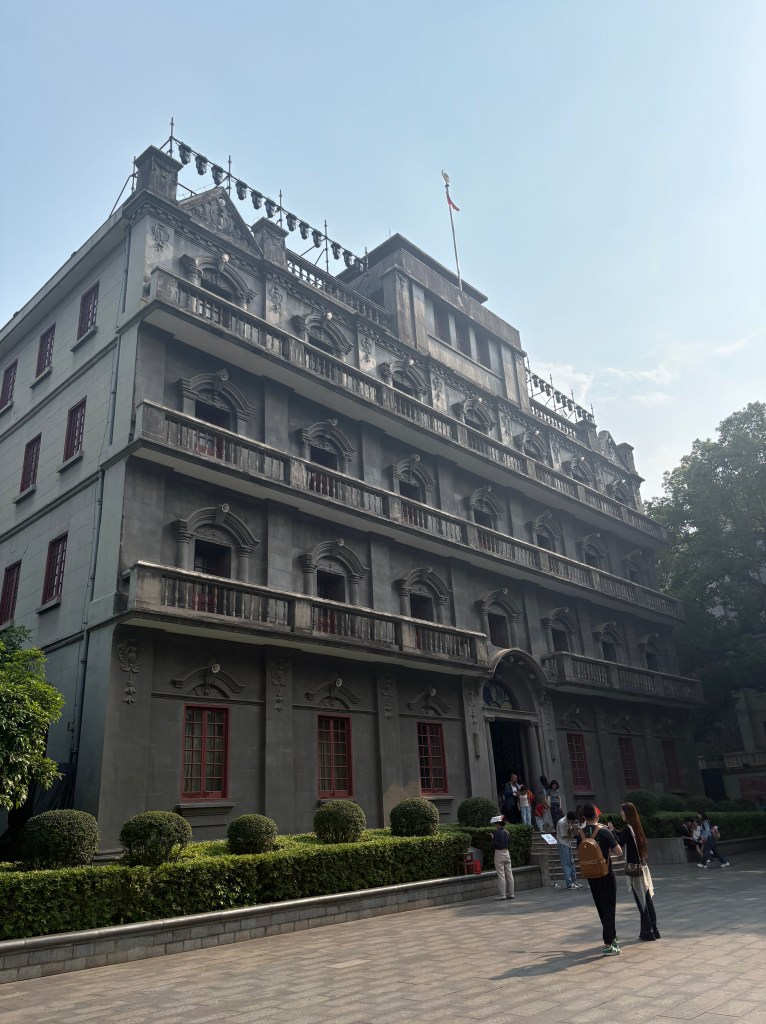
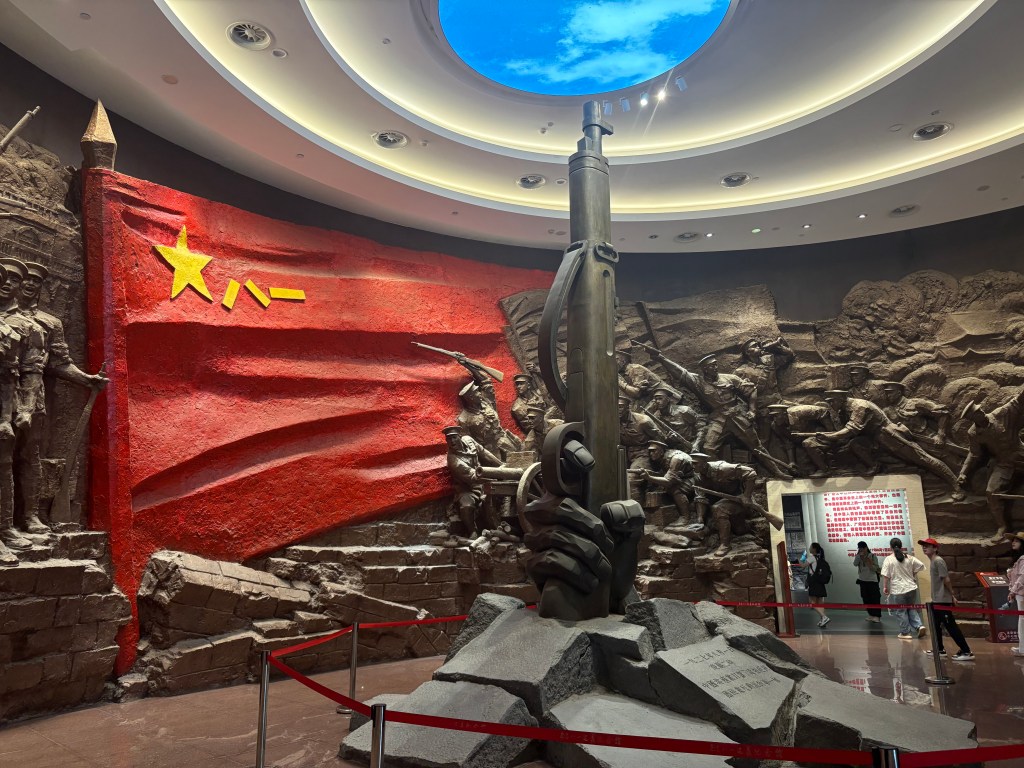
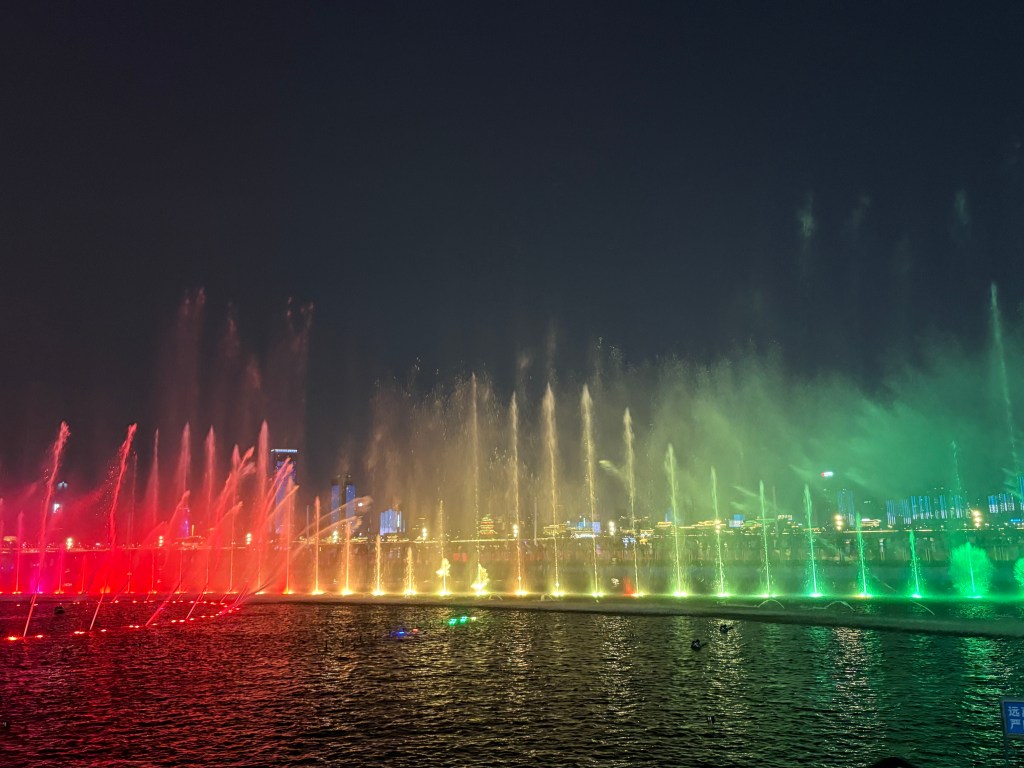
Once in Nanchang there was lots of sights to explore alongside meetings. This included visiting the Tengwang Pavilion, one of the Three Great Towers of Southern China, Bayi Square, and August 1st Nanchang Uprising Memorial Museum. The Uprising Memorial was particularly interesting to visit the former Jiangxi Grand Hotel where the founding of the People’s Liberation Army is considered to have taken place and tour the museum next door to learn about the history.  One evening we were able to take a stroll along the Gan River and watch the fountains at Autumn Water Square. Once finished in Nanchang it was off to Shanghai to fly back to London.

British Council Panel, Ankara and the Anıtkabir

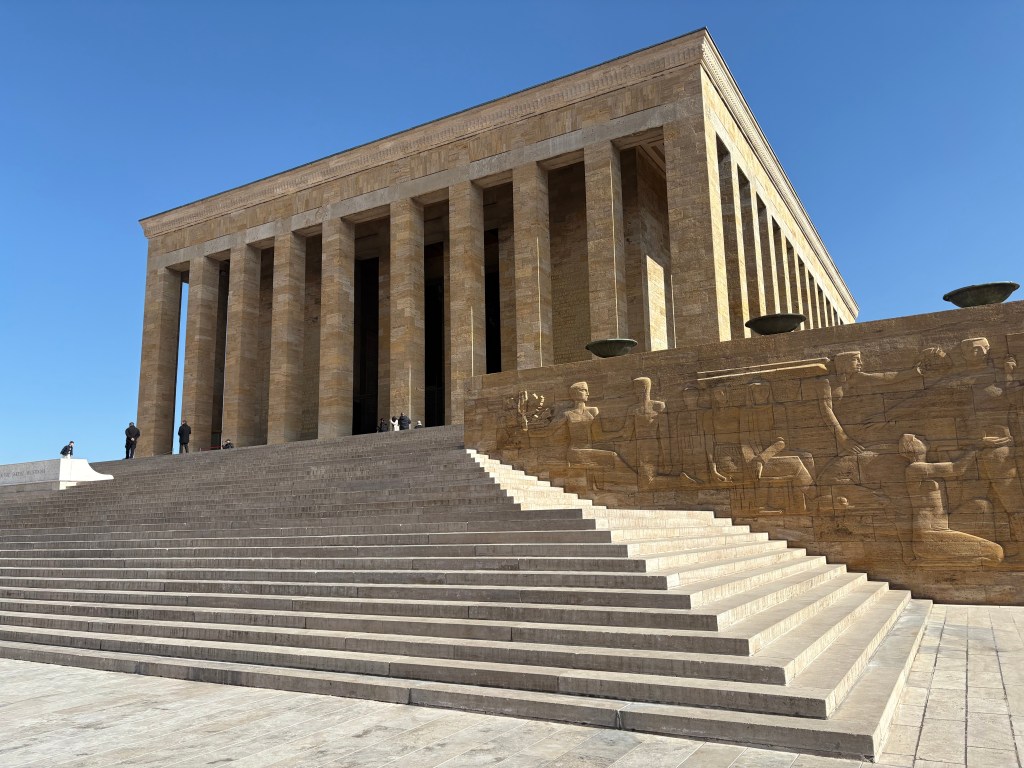
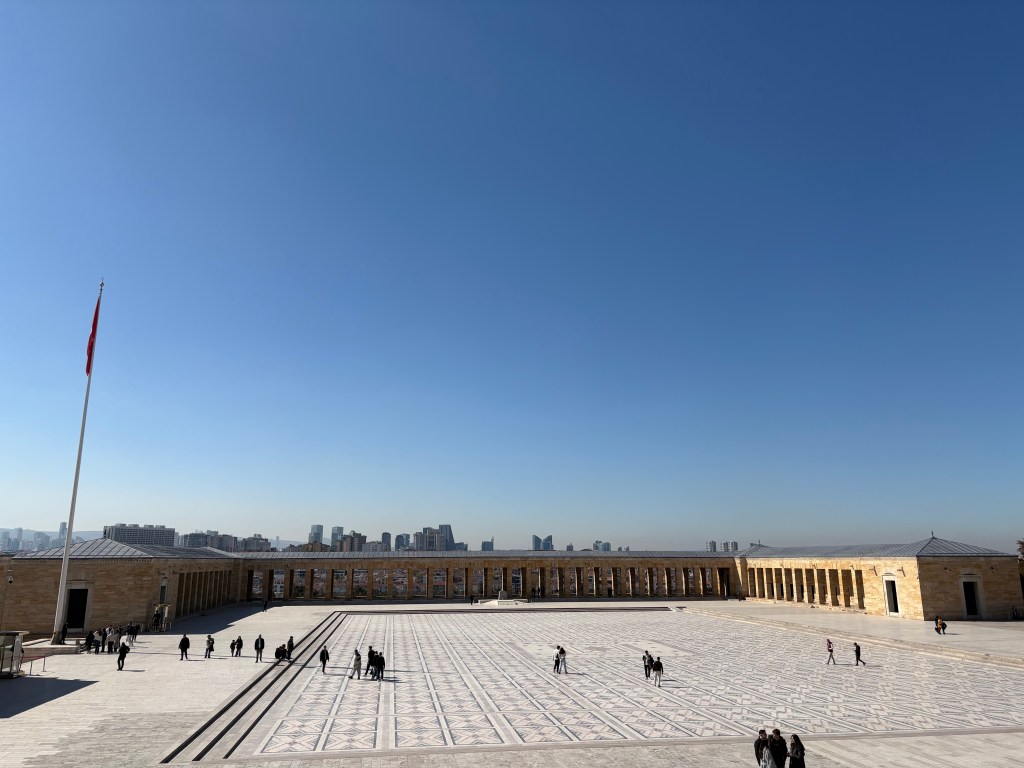
After completing a British Council Connect2Innovate project with partners at Middle Eastern Technical University, I was invited as a panellist at a British Council event in Ankara to present, display, and share our work and outcomes as a successful and effective project. The project brought together industry and academia to generate a series of entrepreneurial case studies, which were augmented by entrepreneurs to transform them into ‘live’ cases. Several of the cases have since been published as open access cases at the Case Centre, and one is scheduled to be published in a Routledge book presenting cases on global entrepreneurship in practice. The event provided an opportunity to reconnect with Turkish partners and further explore Ankara after a previous visit as part of a TÜBİTAK Project. In addition to revisiting the old city, I also visited Anıtkabir, the Atatürk Mausoleum. The Anıtkabir provided stunning views on warm and clear spring morning and an informative museum, making it an ideal way to spend the final morning before flying back to the UK.

Polish National Science Centre Opus Research Bid Expert Evaluation Panel

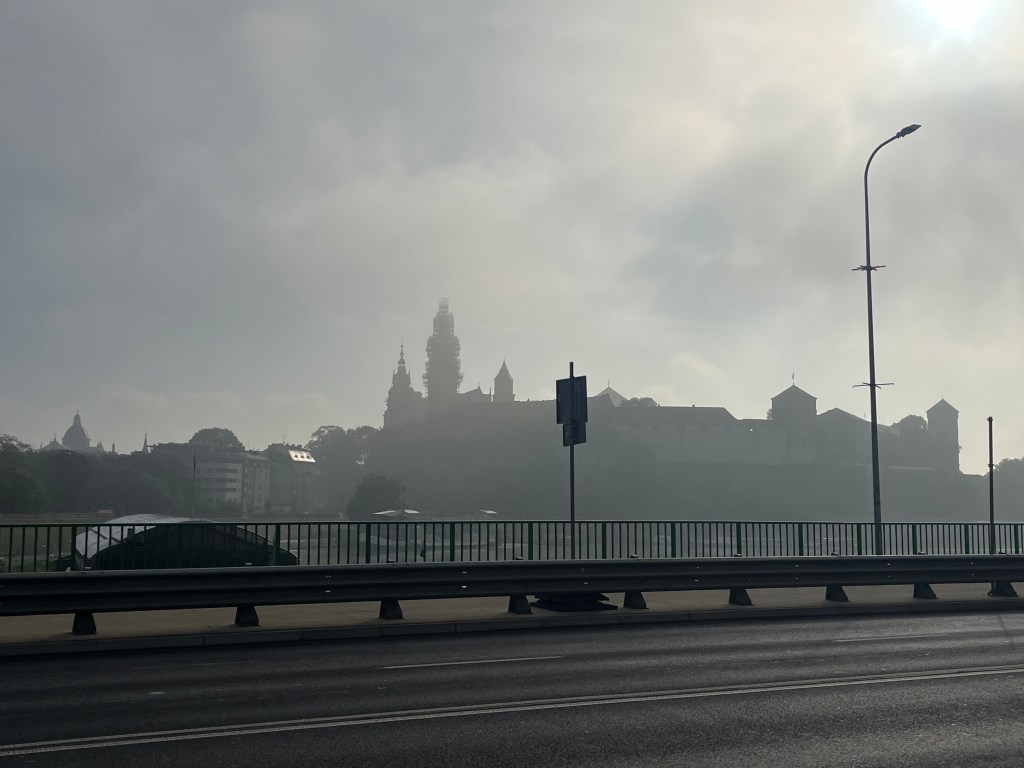
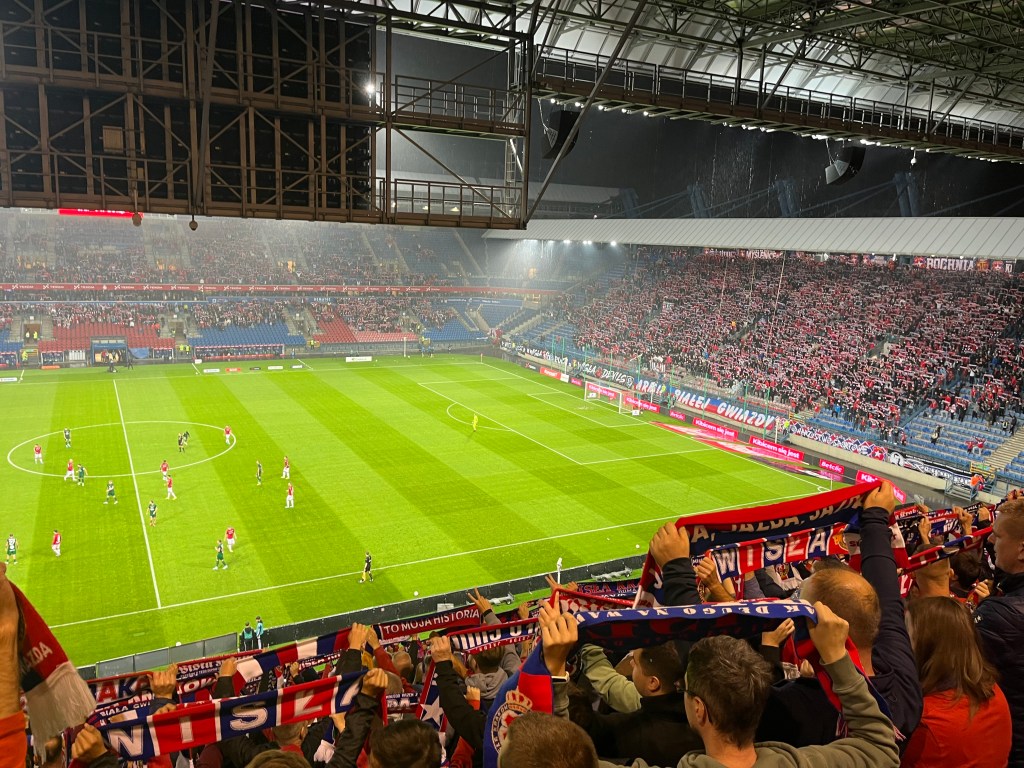
I was invited by the Polish National Science Centre (Narodowe Centrum Nauki) to serve on the International Expert Evaluation Panel for the 2024 OPUS grant call.  This entailed analysing a variety of bids relevant to my topic expertise, travelling to Krakow to shortlist bids, and then determining which bids would receive financing after a second round of peer review.  I had previously served on a PRELUDIUM evaluation panel, which focusses on early-career researchers, and the OPUS panel, Poland’s top-level research funding program, provided the opportunity to review larger, more innovative and complex project proposals.  The opportunity to go to Krakow is always appealing, as is the opportunity to meet and discuss cutting-edge research with other prominent researchers from across Europe.  On the final evening, I went with colleagues from Finland, Sweden, and Poland to watch Wisła Kraków play Warta Poznań, in a torrential downpour. Wisła lost 0-1.  However, this did not detract from an enjoyable trip.
Unveiling Denver’s November Charm: Sports, Beer, and Exploration

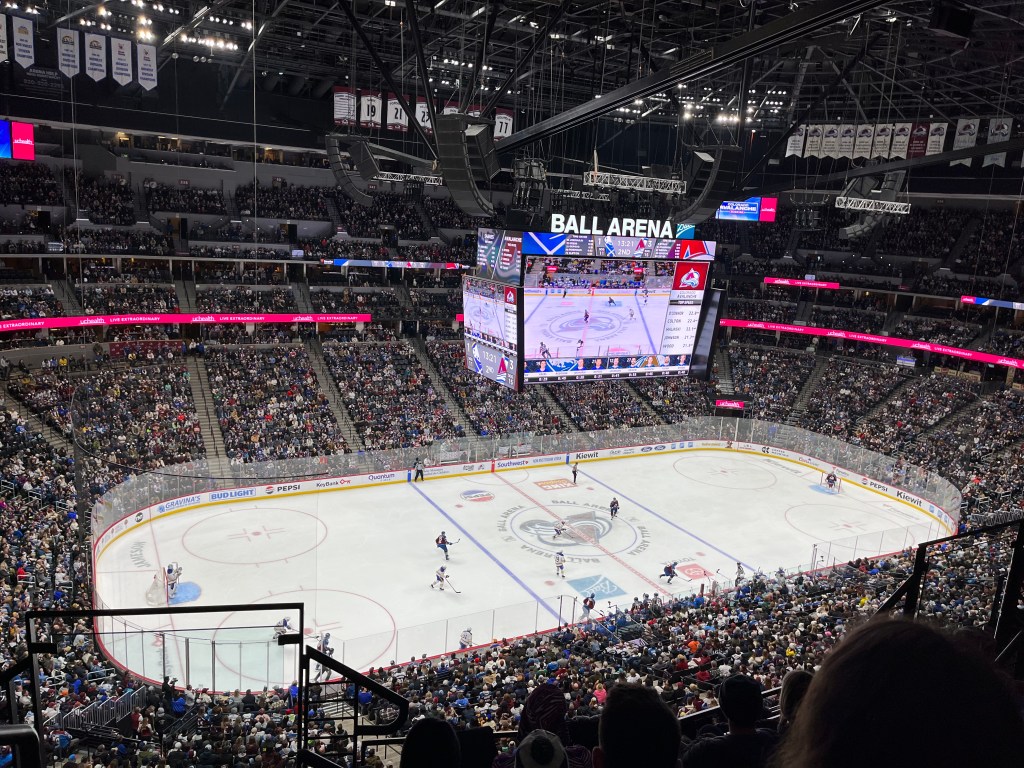
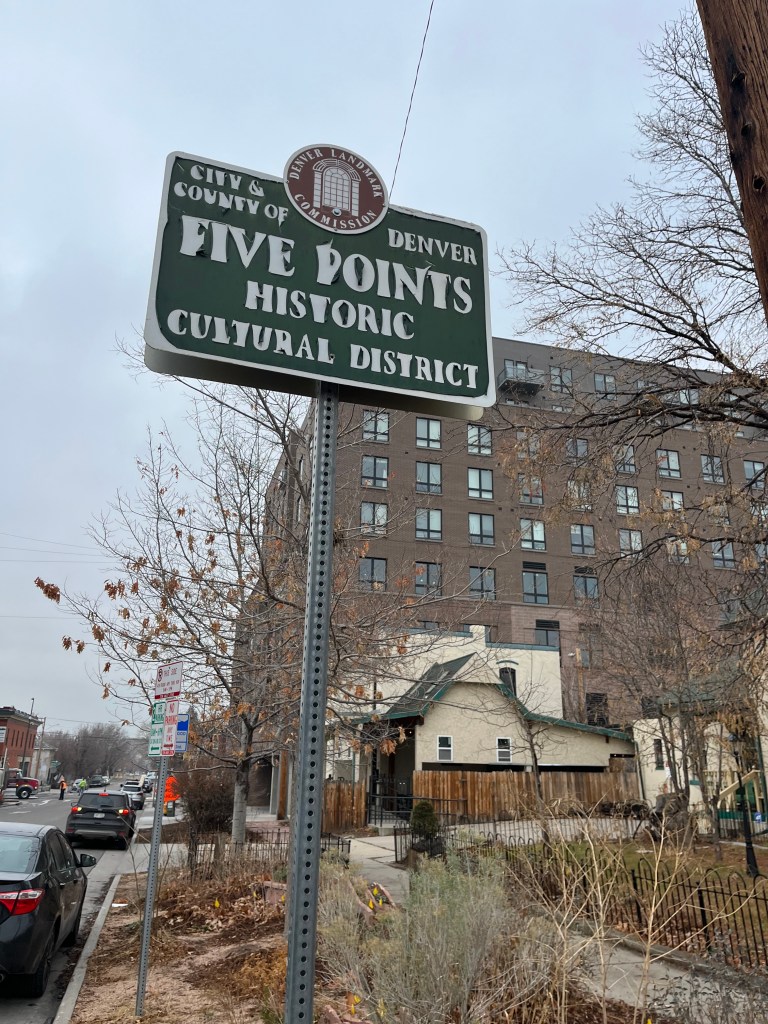
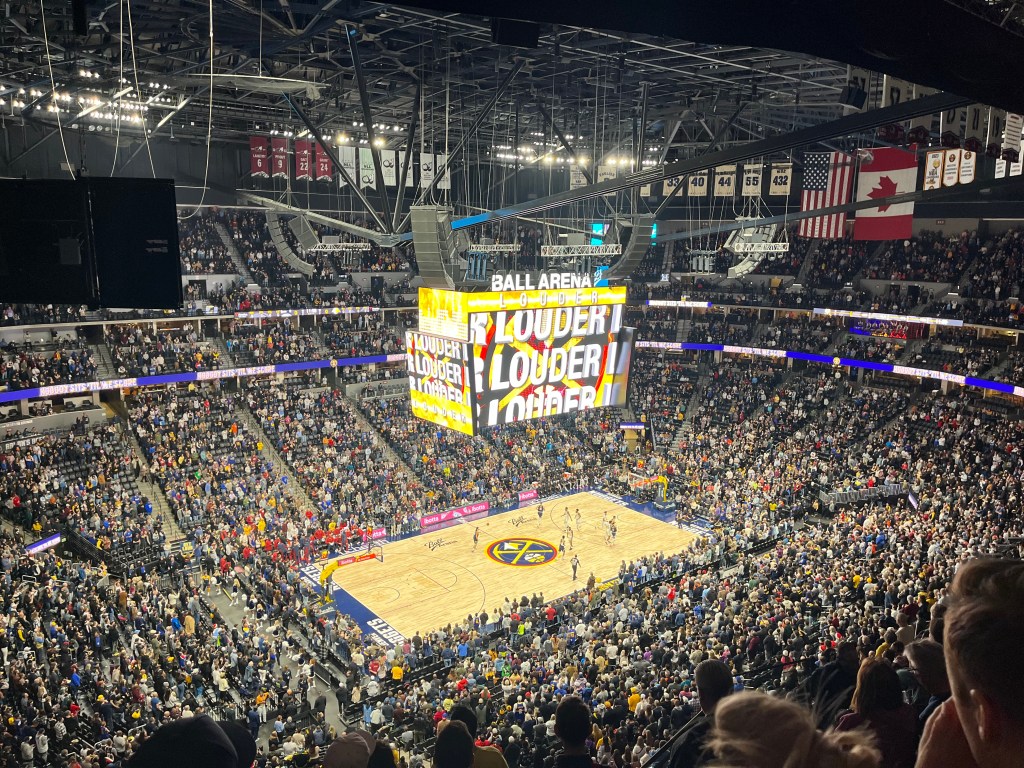
A trip to Denver in November allowed me to further explore the city, sports, and beer scene. The trip coincided with two games at the Ball Arena: the Colorado Avalanche against the Buffalo Sabres and the Denver Nuggets against the Brooklyn Nets. Both games resulted in home triumphs and provided enjoyable evenings of entertainment. During the day, there was opportunity to explore some of Denver’s districts and visit Boulder. The cold weather and chill made it necessary to walk rapidly while exploring. Previous visits did not provide enough time to explore beyond the downtown centre and Golden. While some of the neighbourhoods featured noteworthy art, there was limited culture, with most of Denver’s appeal originating from the natural beauty found outside the city. Like prior visits, there was the opportunity to visit the Coors brewery and some of the many of craft brewers which can be found in the Denver area.

Exploring Ankara: TÜBİTAK Project and City Exploration

I got the opportunity to travel to Ankara for the first time, having previously only visited areas further west. The trip was part of a project funded by TÜBİTAK the Scientific and Technological Research Council of Türkiye. The project brought together educators and social entrepreneurs to produce case studies about their experiences and journeys in order to provide context-specific teaching resources. The goal was to expand the use of student-centered teaching strategies in the entrepreneurial classroom. Following the workshops and sessions I had the opportunity to explore the city.

First Dunkin’ & Ben & Jerry’s

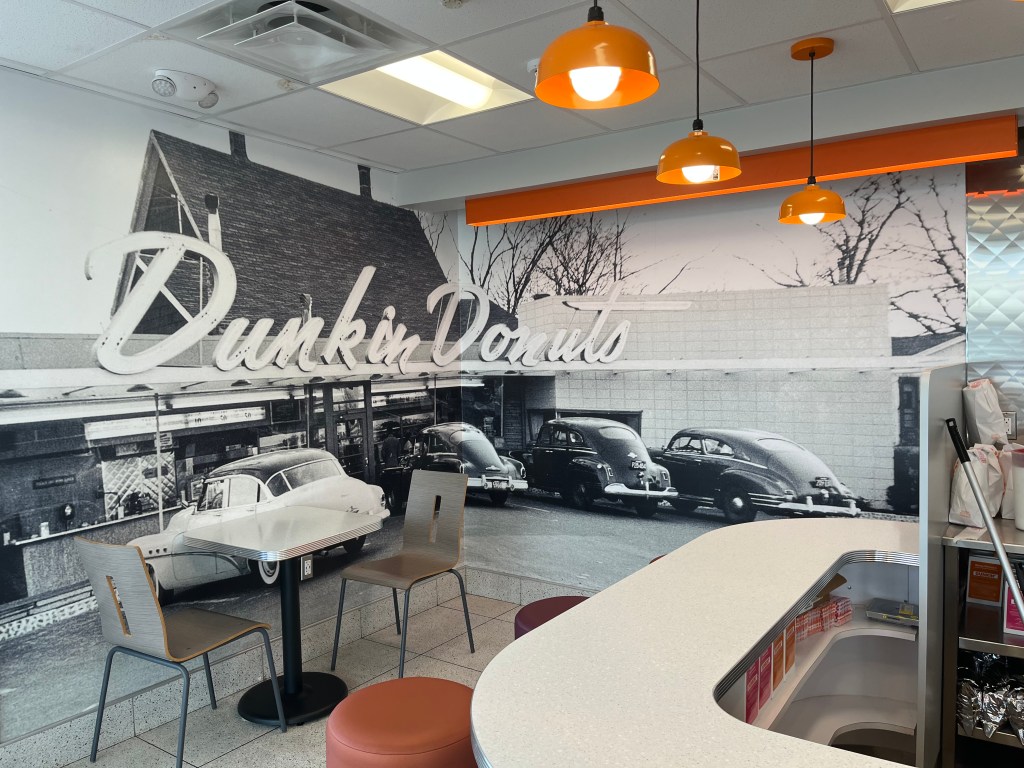
As part of a summer trip to New England on the way top Houston, we managed to visit the first Dunkin’/Dunkin Donuts and Ben & Jerry’s. The first Dunkin’, originally Dunkin’ Donuts, is in Quincy on the edge of Boston. Compared to many first locations of famous restaurants and companies, it was rather understated in signifying that it was the original venue. Whilst modernised, it still had a Dunkin Donuts sign, rather than the contemporary Dunkin’ brand and had a small sign underneath stating that it was ‘The Original Dunkin’. Inside it had some neat old images of places, but it still operated like a normal Dunkin’ with no different merchandise or anything unique to the first location. Which is quite different to the offering at Starbucks first store in Pike Place Market in Seattle.

Whilst, on the New England trip we also visited the Ben & Jerry’s factory in Vermont. This has a specific visitor offering, providing tours of the factory and tastings of fresh ice cream, including flavours unique to the location. They also had some interesting features, including a flavour graveyard, detailing all the past flavours which are no longer made, which offered an interesting stroll. The comparison between the first Dunkin’ restaurant and the Ben & Jerry’s factory in terms of offering a visitor experience was quite stark. It might suggest that people don’t hold Dunkin’ as sentimentality as I do and they don’t get many people who go out of their way to visit, or maybe the franchise nature of Dunkin’ doesn’t support deviating from the norm.

Two Trips to Kyiv Seasons Apart

It had been just over a year since leaving Kyiv in June 2020, at the height of the pandemic, that the opportunity arose to return for three weeks. This opportunity was offered midway through a month in London, meaning it would involve me being away from home for nearly two months over the summer. The sense of adventure and the feeling of unfinished business led us to jump on the plane (or a couple) to go back to Kyiv. The visit coincided with the 30th anniversary of the modern founding of Ukraine, which was why in part we went. This meant that there was a buzz in the city and events organized during our stay. However, I still managed to attend a home Dynamo Kyiv game and a Shaktar Donetsk game, as the latter have moved their home games to Kyiv since we left Kyiv. The biggest change in Kyiv was the introduction of rental electric scooters dotted around the city. The introduction of the sharing economy had hit in a big away! There were five plus different companies offering scooters, using the normal scan the QR code on the handlebar process, plus numerous similar bike offerings. Whilst Kyiv was not the city I would have thought most suited to this innovation, in terms of infrastructure such as limited bike lines and rather rough and wonky pavements, it did make the city even more accessible. There were also limited geofenced zones compared to some other cities, which made navigating the city a breeze. When returning to a place I also like to ensure that I do something new, and one thing which I had never done was visit any of Stalin’s underground tunnels. These tunnels were built under the orders of Stalin, who was concerned that if Kyiv was attacked and the bridges over the Dnieper River destroyed, the Soviet army would not be able to move weaponry and troops around the city. The tunnels never got fully completed and brought into service, but their entrances can still be found on the banks of the river, and on the islands. So, with the help of the new scooters, I ventured out to hunt one of the tunnels down. Once located, the tunnel entrances themselves were rather underwhelming but considering the effort and process of their construction in that period, are interesting. Whilst the tunnels were never finished; the size and scale of the secret project highlights the ambition and fear of the time.

After a visit to Kyiv in the summer, a second opportunity arose to visit it again in the winter. The travel was last minute and involved travelling a rather unconventional flight path of Washington – Newark – Zurich – Vienna – Kyiv on Christmas Eve (and into Christmas day!) but provided the opportunity to visit Kyiv in the snow again. The first thing I noticed was the disappearance of all the scooters for the winter, which whilst making sense, highlighted another challenge of launching them in such a seasonal location. Seeing the same sights in such different conditions is always interesting, as was being in shorts in the summer and then so bundled up only 4 months later. The time of year meant that there was no football to attend and there was a need to find some warm places to stop and warm up in when exploring the city. The Kyiv Food Market was particularly nicely lit up and always has a good selection of food and drinks. During the visit, I decided to head out to the Art-Zavod Platform on the Left Bank, a short walk from the Lisova metro stop and the Kyiv National University of Trade and Economics. The area is an Arts start-up hub and like all good start-up ecosystems has a coffee roaster and the 2085 beer brewing operation, a craft brewery which has been growing in prominence within Ukraine. It is interesting to see how the entreprenurial ecosystem is growing and developing within the Ukrainian context. The area is reminiscent of the 798 district in Beijing and the repurposing of old manufacturing buildings into art studios and incubators. Whilst Kyiv is a very different experience in the bitter cold and snow, there are always interesting things to visit, and do, no matter the season.