ICSB 2017 & Buenos Aires

The International Council of Small Business (ICSB) World Conference was in Buenos Aires for 2017. The conference was held at the Catholic University of Argentina, which is situated on the Puerto Madero harbour side, which is only a short walk from the old historic town and the Plaza del Mayo. The conference itself ran over three days and had many tracks related to entrepreneurship and small business. All of the competitive paper sessions were run in tracks, during one period each day. On the first day I attended the entrepreneurship education track, which provided some interesting teaching ideas. On the second day I attended the international entrepreneurship track to hear what other researchers were doing in this area. On the final day I was presenting in the new and innovative methodologies track. The nature of the track I was presenting in meant the session contained a fairly diverse range of topics including university spin offs and the role and impact of stress in entrepreneurship. The nature of the paper I was presenting, which utilized a non-stream methodology, meant that the discussion and feedback which followed the presentation was mainly focused on the methodology itself rather than the paper. It was a shame the competitive paper and workshop sessions were not more spread out over the three days, as the schedule meant that the number of sessions which could be attended was limited.

The scheduling of the conference and flights meant that I had the afternoon free on the Saturday after the conference drew to a close and most of Sunday free as my flight left at 8:55pm for Houston. I decided to join a walking tour of the old city on the Saturday afternoon and a tour of the Retiro and Recoleta areas on Sunday. The two tours provided the opportunity to learn more about the historical development of Argentina and Buenos Aires and the current economic and political situation. Plus, the opportunity to see some of Buenos Aires major landmarks including Plaza de la Republica and the Recoleta Cemetery. The conference and the trip were very informative, the city and the architecture was not as I expected and the legacy and footprint of Spanish colonialization smaller than I expected. Despite, the current economic difficulties the skyline of the city centre looked like many European capital cities and was very developed.

A Quick Trip to Colonia, Uruguay

After flying from London to Houston and then on to Buenos Aires. I had a morning to recover before the ICSB conference started. To be honest it was a long morning, as the opening event did not start until 8pm, following a late dinner Latin culture.

This gave me the opportunity to use most of the day to explore. I was keen to get across to Uruguay being so close. So I decided to use the day to take the express Buquebus ferry in the morning to Colonia and return in the afternoon. Being outside of peak season it was possible to get tickets in the morning at the terminal. The crossing was easy enough, the ferry terminals are like mini airports with check in desks, where big bags are checked in the hold and returned on belts at the other end. Plus hand luggage is screened and you have to pass through a mental detector, before getting your passport checked and stamped for the country you are going to arrive at before boarding the ferry. The Argentinian side is more organised so was a breeze, whilst the Uruguayan side took a little longer to clear.

Colonia’s old town is an UNESCO world heritage site. However, due to its size (and my walking pace) 5 hours was enough time to explore it. The old city is only a short walk from the ferry terminal. At which point you can pass through the old gate and follow the tree lined streets to the main old square and church. The old town is full of cobbled streets and is surrounded by the sea on three sides. The city swung between being a Portuguese and Spanish colony, so contains features of both Portuguese and Spanish architecture and design. The city layout within the old city walls follows a Portuguese layout and the city outside of the walls follows a Spanish grid layout.

OBTS Teaching Society for Management Educators Conference 2017

After my trip to China (and a short stopover in London) I headed to, Providence Rhode Island, for my first OBTS Teaching Society for Management Educators Conference. I try and attend one research and one education/educators conference each year. This helps to inform both my practice and research, plus helps to link and develop innovative education research. I submitted to the conference based on a recommendation of a colleague, who had previously attended an OBTS conference in 2016. The conference was held at Providence College who did a fantastic job of hosting the event. The accommodation was nice (my first time staying in student halls, although we did not share rooms) and the breakfast and lunches were nice with the whole student cafeteria opened up and on offer. After coming back from China I was happy to just eat pizza and BBQ chicken all day.

I ran a session on applying innovation in the classroom, which was scheduled for the first morning of the conference. This worked out quite well as the conference was very sociable and ran late into the evening on most nights, so I was happy to get my session out of the way and relax and engage with the conference. I attended several very useful sessions, the highlight being a session on stacking cups applied to scaling up entrepreneurial businesses. The conference was mainly focused on traditional management subjects rather than enterprise and entrepreneurship, so the amount of directly relevant sessions was limited. But it was good to see all the different sessions and see how others teach management.

Enterprise Education Workshops in Wuhan, Qingdao and Changzhou

My trip to China gave me the opportunity to visit four higher education institutions across three Chinese cities to deliver workshops. The workshops were a mix of enterprise education pedagogy and enterprise curriculum design workshops, both of which were designed around practical participation and input.

I had only once previously been to Wuhan to visit the Chinese University of Geosciences, so it was nice to get the opportunity to visit the city again, this time to visit the Wuhan City Polytechnic. It was great to see the support and development of an enterprise agenda at the college, having recently opened a state of the art entrepreneurship and innovation school. Luckily my worries of visiting Wuhan, a notoriously hot city in June did not play out. The new entrepreneurship and innovation school had great facilities and great air conditioning. Whilst, there was not too much time to explore Wuhan itself, it was great to see many of the bridges and urban development being created around the numerous waterways.

The second stop was Qingdao, which is a city despite being told many times I should visit, I actually never have had the opportunity to do so previously. So it was great to be able to visit the city and the China University of Petroleum and Qingdao Technical College. The trip finally offered the opportunity to drink Tsingtao in Qingdao and also the opportunity to explore the coast. I learnt that Tsingtao produced in Qingdao can be identified by a slightly different label compared to Tsingtao produced in other regions. The China University of Petroleum as well as having wonderful facilities, was located adjacent to the beach so it was possible to walk along the seafront and explore the bars along the seafront. I also found time to have a quick swim at the beach on the final morning before we left, which I think is actually the first time I have ever gone swimming in the sea in China.

After leaving Qingdao we flew to Wuxi and then drove to Changzhou in a terrible storm. The flight from Qingdao to Wuxi was delayed and very bumpy, although after my early morning swim I managed to sleep through most of the flight, so only heard stories of terrible flight. It was the first time I had ever been to Changzhou, excluding passing through it on a train. It is located between Shanghai and Nanjing; two cities I have been to numerous times. Although Changzhou itself, as could be expected is a lot sleepier than its loud and busy neighbours. Its city centre and ubiquitous tower does not have the same impact and lasting impression as Shanghai. However, it does have some nice parks and a Buddhist temple (Tianning Temple).

After the workshop in Changzhou the fun started. Our flight from Changzhou to Beijing was first delayed and then cancelled and rescheduled for the next day. Booked on the early morning flight out of Beijing to Zurich and then on to London meant that I missed this flight and had to be rebooked on to a later evening Air China flight to London. With an already tight schedule before heading to the US for the OBTS conference, it meant only a McDonalds at Heathrow and a few hours’ sleep before heading out again. As always, I seem to never accurately know when I will go to China and when I leave.

Beijing: But not home anymore

It seems you can leave China but you can’t get the China out of you. It has been only 3 and a half months since I left China. But I had the opportunity to return to facilitate some enterprise education workshops. The process of getting a visa was complex as I had to get my last visa cancelled before getting a new one. This made for 3 trips to London, which allowed for the opportunity to explore places I hadn’t visited in London for several years and dovetailed with attending the Aviva Premiership rugby final last weekend.

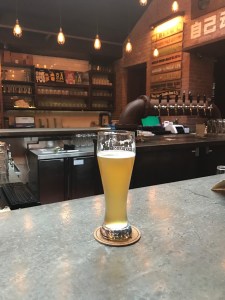
Getting back to Beijing offered me the chance to visit some of my favourite locations and bars. Although, I only had one evening in Beijing, which made for quite a rushed late afternoon and evening. I found myself walking around familiar streets and locations looking at the changes and similarities and feeling nostalgic. But I managed to find time to visit Jing-A like old times for some, so this made for a nice evening before starting the next 14 days of adventures in China. It seems with China I never know when I will return or when I will leave, but it always finds a way to return.


Emerald Literati Network Awards: Highly Commended Paper

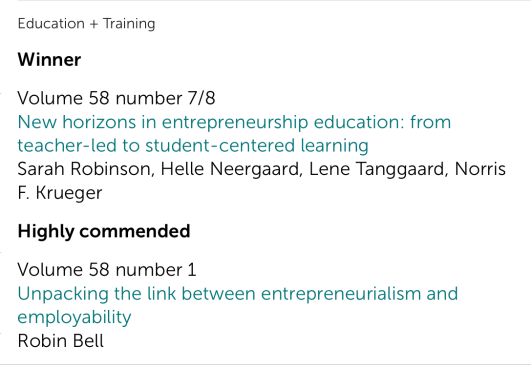
I was delighted to find out on Friday that my paper ‘Unpacking the link between entrepreneurialism and employability‘ published in Education + Training was identified as a highly commended paper (joint runner up) in the Outstanding Paper category of the 2017 Emerald Literati Network Awards for Excellence. The paper will now be open and free for everyone to access and view until June 2018.

The paper is the first attempt (that I am aware of) to quantitatively link entrepreneurship/enterprise attributes to graduate employability. I think this offers a contribution to help move the field forward. The findings help to underline the argument that some entrepreneurship and enterprise education is important for everyone, not just those considering setting up a business. But entrepreneurship and enterprise education can help to secure employment in a professional or managerial field, which are often seen as a graduate level roles. A simple overview of the paper and its findings, along with a infographic can be found here.

Emerald Literati Network Awards

Research Methods in Bielefeld: It does exist (honest)!

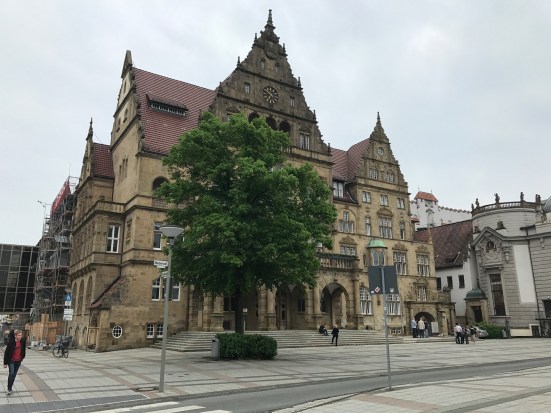
I spend this weekend in Bielefeld, a city in North Rhine-Westphalia Germany. A city which is not so well known to many outside of Germany, and maybe not the first port of call for many within Germany. So much so, a satire conspiracy exists (the Bielefeld Conspiracy) claiming that the city does not exist but is an illusion or fake place. This conspiracy theory is based on the premise of:

Do you know anybody from Bielefeld?

Have you ever been to Bielefeld?

Do you know anybody who has ever been to Bielefeld?

Well at least I can say I have been to Bielefeld (in fact this is my second time), plus I know other people have been. The city itself doesn’t have as much to offer as other German cities, although it does have a castle and some nice streets.

Bielefeld
Bielefeld: Does it exist?

The purpose of the visit was to teach on the Worcester Doctor of Business Administration (DBA) program. Completing the second and final teaching block of the second module, focusing on research philosophy and methodology. It is always a pleasure to teach this module with an engaged cohort, as there is so much discussion to be had. Plus, it is great to see the development of research ideas and plans from an embryonic stage to something action ready. Unfortunately, I lost my voice the night day before the teaching, so my presence was somewhat muted. Although, this didn’t seem to affect the sessions too much.

Helsinki – Final EBBD Project Meeting

At the start of the week I ventured to Helsinki for the final European Business Baccalaureate Diploma (EBBD) project meeting. The meeting brought down the curtain on a three-year EU funded project, which focused on developing a European award which recognized business and international skills and competences. The final meeting was focused on reporting and evaluation and discussing the sustainability of the project. The meeting took place at the lead project partner Suomen Liikemiesten Kauppaopisto (Helsinki Business College). Running next door in the national exhibition center was the Taitaja -skills competition, the largest vocational education event in Finland, which brought together more than 500 competitors and 80,000 visitors and exhibitors. The event promotes vocational education, highlights key skills required in the economy and connects vocational education with entrepreneurs and companies. This made it possible to dip into the event in the afternoons and during breaks. It was nice to explore all the stands and workshops focused on a range of industries and skills, including a typically Finnish Rovio Angry Birds stand, highlighting programing and coding skills.

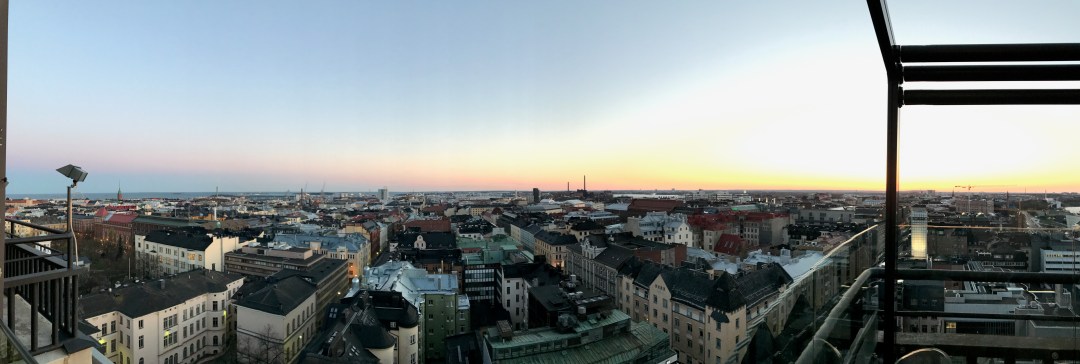
The evenings provided the chance to explore Helsinki a little, a city which seems to have some similarities to Moscow but with a coastline and harbor. The similarities include a love for the sun when it emerges and some of the architecture. Helsinki is a relatively low rise capital city and one evening we found the time to have a drink at the Torni hotel’s Ateljee rooftop bar, which has an uninterrupted view over the city from the 14th story.

IMG_4330

Star City: As close to space as I will ever come

A few weeks along whilst in Moscow I had the opportunity to visit Star City. Which is the cosmonaut (astronaut in the US) training center. However, as the US are no longer sending people into space directly, we will acquiesce to the term cosmonaut. As space shuttles are no longer in use, it means everyone going into space trains at Star City. As the training center offers the training on the soviet era rockets, which are still in use. It was fantastic to visit Star City to seeing the apparatus which is currently still in use and cosmonauts are still training on. They have replicas of the rockets used and the international space center components for the cosmonauts to train on. It is not a regular tourist opportunity; indeed, it was previously a closed Russian city and it still has this feel being situated in the woods away from other development and with no road signs.

It was incredible to see where cosmonauts train in real life and to see the items used for space travel. It really drilled home that some things are really made to last! Plus, it is important to have a balance between proven technology and new technology. It was explained that the original rockets are still used, just with newer systems integrated into them, which makes the travel more comfortable as the systems are much smaller.

ICSB 2017 All Booked

Conference booking seasons continues. I am delighted that my paper has been accepted for the International Council for Small Business World Conference in Argentina. The paper is focused on the perceived entrepreneurial attitudes and characteristics entrepreneurs think are required during the business start-up phase. The paper was submitted to the ‘Methodological challenges and new research methods applied to SME and Entrepreneurship research’ stream, which gave me the chance to learn and play with a new methodology.