What is the Paper About?
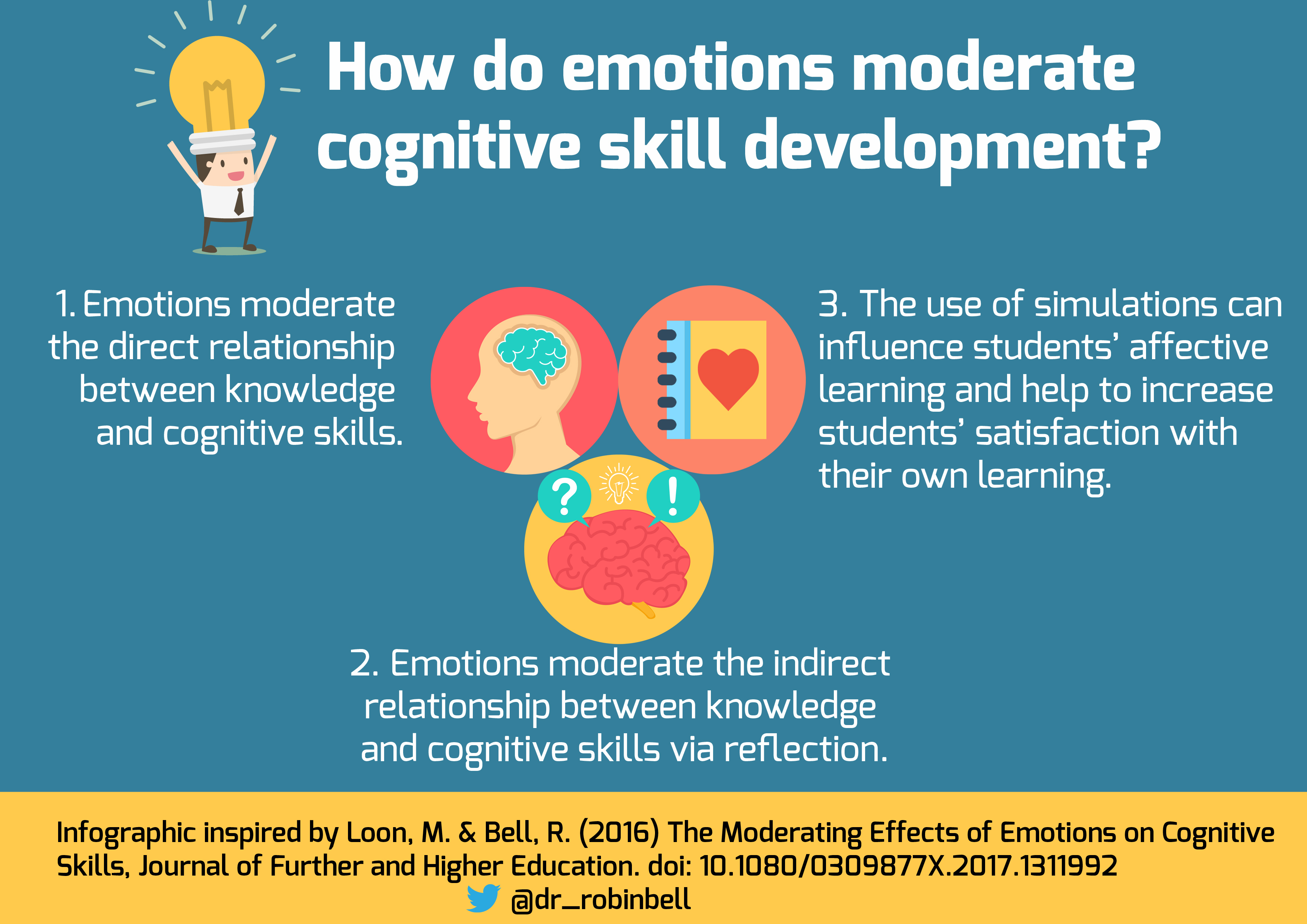
This research explores the importance of emotions in improving cognitive skills and how they interact with knowledge and reflection. This research examines the role of emotions as a moderating factor in the learning process. The research findings reveal that in our sample, emotions moderate the direct relationship between knowledge and cognitive skills, and the indirect relationship between knowledge and cognitive skills via reflection. This highlights the critical role that emotions play in student learning.
Why is it Important?
The tutor-student ratio has declined in many higher education institutions due to the massification of higher education and technological developments. A reduction in the tutor-student ratio can diminish the ‘human touch’ of teaching and learning, which is often seen as an interpersonal process. The finding that emotions play a part in directly and indirectly moderating the relationship between knowledge and cognitive skills, highlight the importance of considering students’ emotions in the learning process. The adoption and use of computer simulation games, as an example used in this research, influences students’ affective learning and thus help to increase students’ satisfaction with their own learning.
 Robin Bell